Roberto Cardinale

Structures That Shape Us

Zane Bennett Contemporary Art · Santa Fe, NM
September 25 – November 29, 2026


Foreword

The church form speaks to Roberto’s love of ecclesiastical architecture and springs from his Benedictine monastic background and world travels. The churches, built of pine and richly painted, are about 12" wide and 16" high and vary in length. While he specializes in the churches, missions and synagogues of New Mexico, beginning in 1985, he has done nearly 1000 pieces inspired by buildings of faith from around the world. He continues working today.

Structures That Shape Us gathers fourteen works: eleven sculptures and three of the working drawings from which they were built. Alongside the New Mexico missions and chapels are buildings from farther afield — Richard Meier’s Jubilee Church in Rome, Marcel Breuer’s former Whitney Museum on Madison Avenue, and the Pueblo, Colorado parish where the artist’s parents were married in 1935. Seven of the sculptures open to a drawer or interior collage by PJ Cardinale, his wife and collaborator since 1966.

Born in 1939 in Pueblo, CO, Bob has a BA in Mathematics and Philosophy earned while a Benedictine monk, an MA in Art from the University of Northern Colorado, and a Doctorate in Art Education from Arizona State University. He has been a professor at the University of Northern Colorado (1968-69), The Ohio State University (1970-1974), University of Arizona (1974-1981), and Boston University (where he was Director and professor of the Program in Artisanry, 1981-1985). He has been president of the San Antonio Art Institute (1985-1990) and President of the Museum of New Mexico Foundation (1990-1992). In 2009, he was named Master of the Southwest by Phoenix Home & Garden Magazine. He and PJ, his wife (married 1966), a collage artist, have lived in Santa Fe, NM since 1990.

Select Permanent Collections

The Albuquerque Museum of Art and History, Albuquerque, NM
The Harwood Museum of Art, University of New Mexico, Taos, NM
The Sangre de Cristo Center for the Arts, Pueblo, CO
The Billy Graham Museum of Art, Wheaton, IL
The Benedictine University Museum of Art, Lisle, IL


Sculptures

11 works

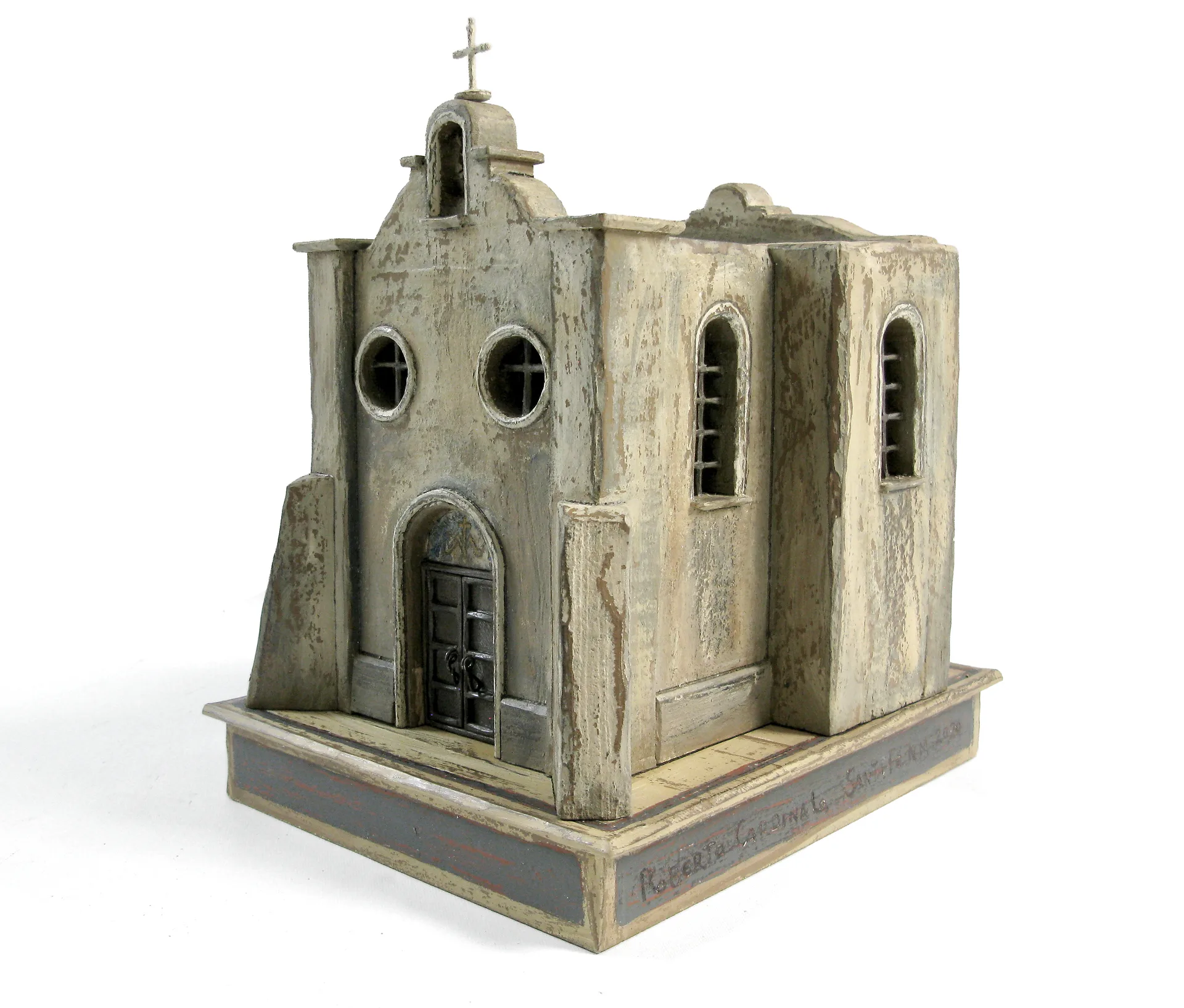
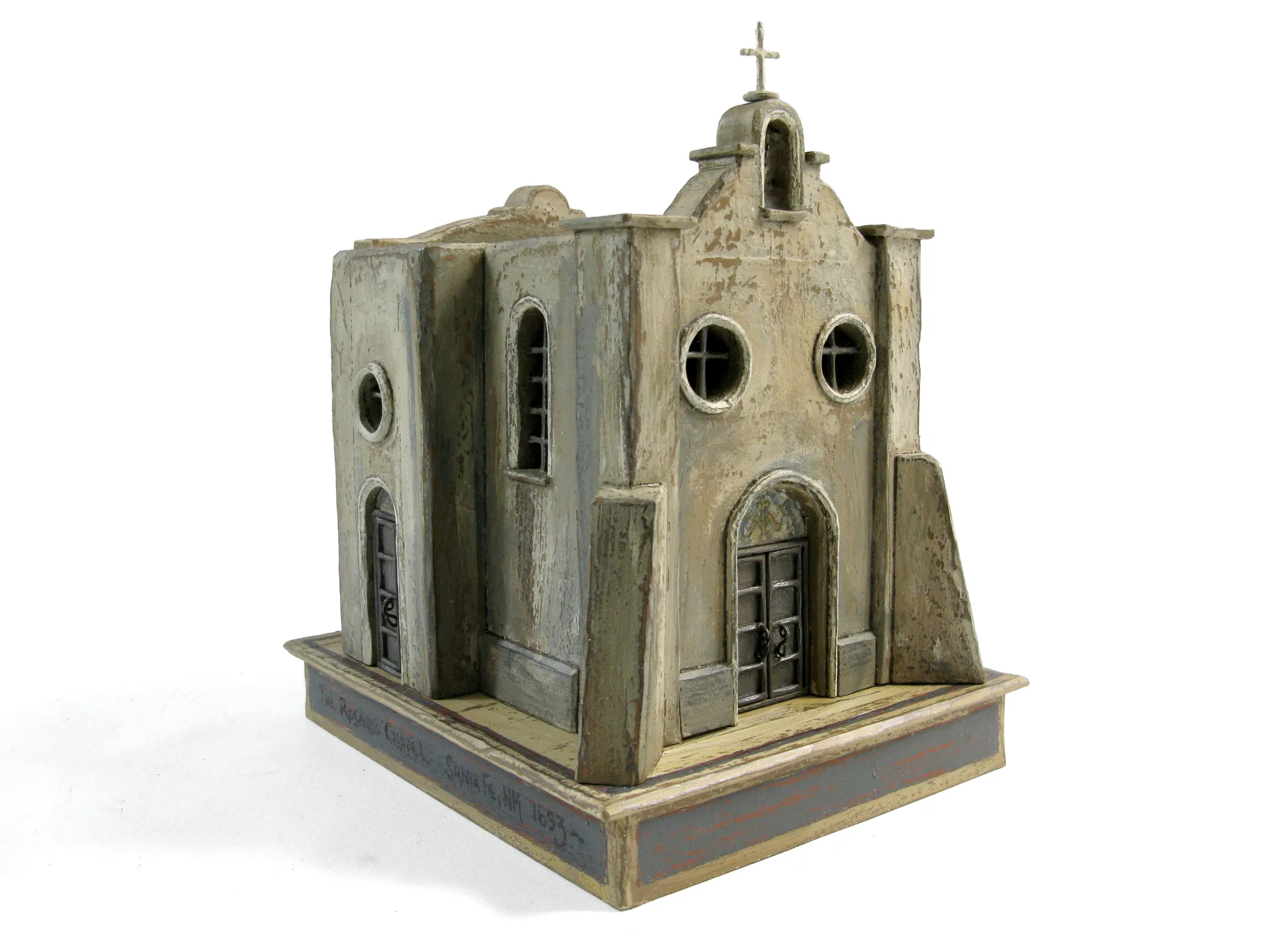
The Rosario Chapel sculpture by Roberto Cardinale, three-quarter view of the adobe chapel’s front facade with its bell gable and cross.

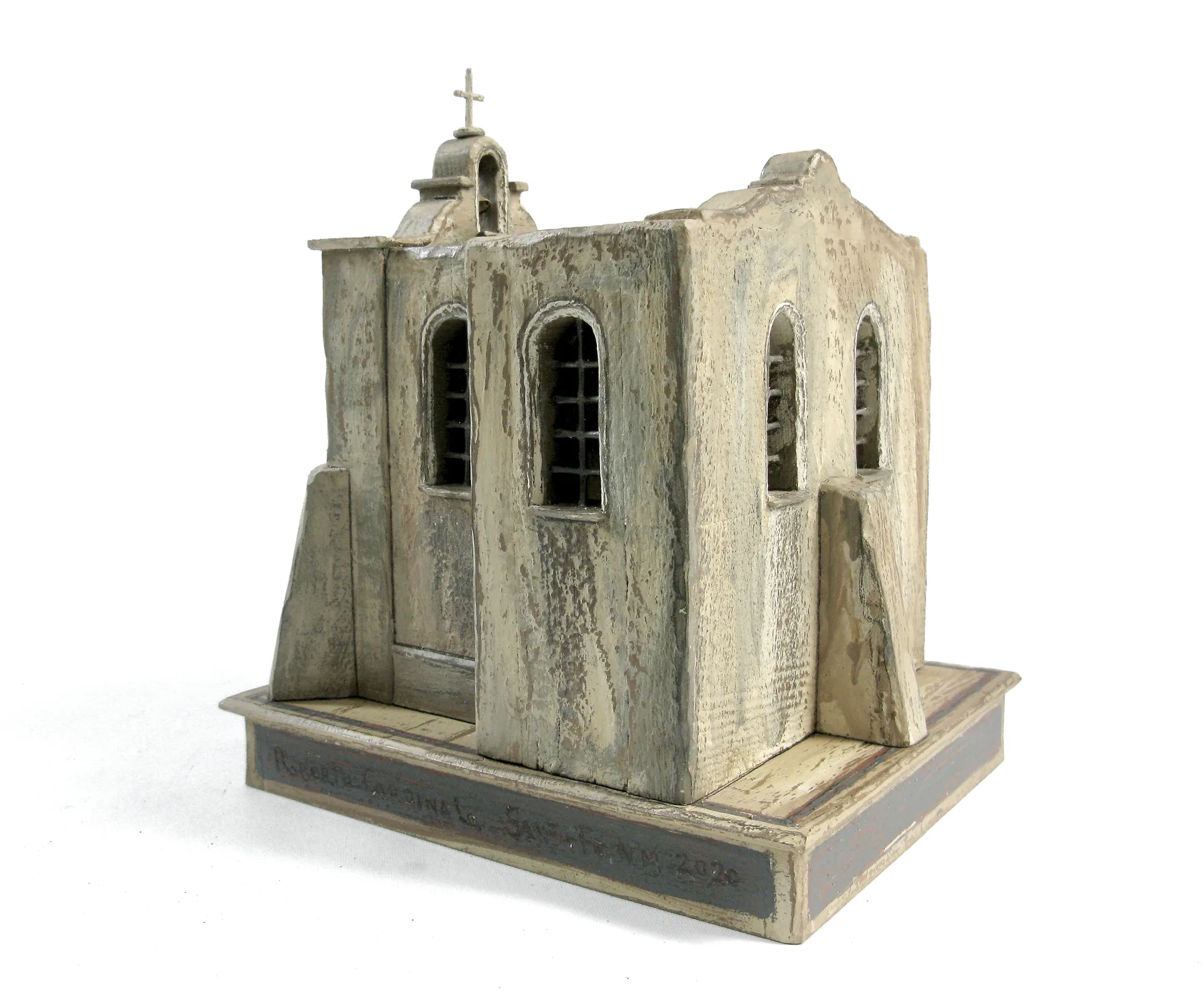
The Rosario Chapel

Santa Fe, NM, built 1692 & 1914

Rosario Chapel, at the back of Rosario Cemetery in Santa Fe, stands on the traditional site of Don Diego de Vargas’s 1692 camp, where he is said to have vowed to honor the Virgin Mary (La Conquistadora) if he could retake the city after the 1680 Pueblo Revolt. The original sanctuary was later replaced by the present adobe chapel, begun in 1807 and enlarged in 1914.

10” W x 12” D x 13 ½” H · Painted pine · 2020 · Roberto Cardinale

$1,800
The Rosario Chapel sculpture seen from the front right, showing the arched entry and side windows. The Rosario Chapel sculpture from the rear, showing the nave roof and the buttressed side wall.

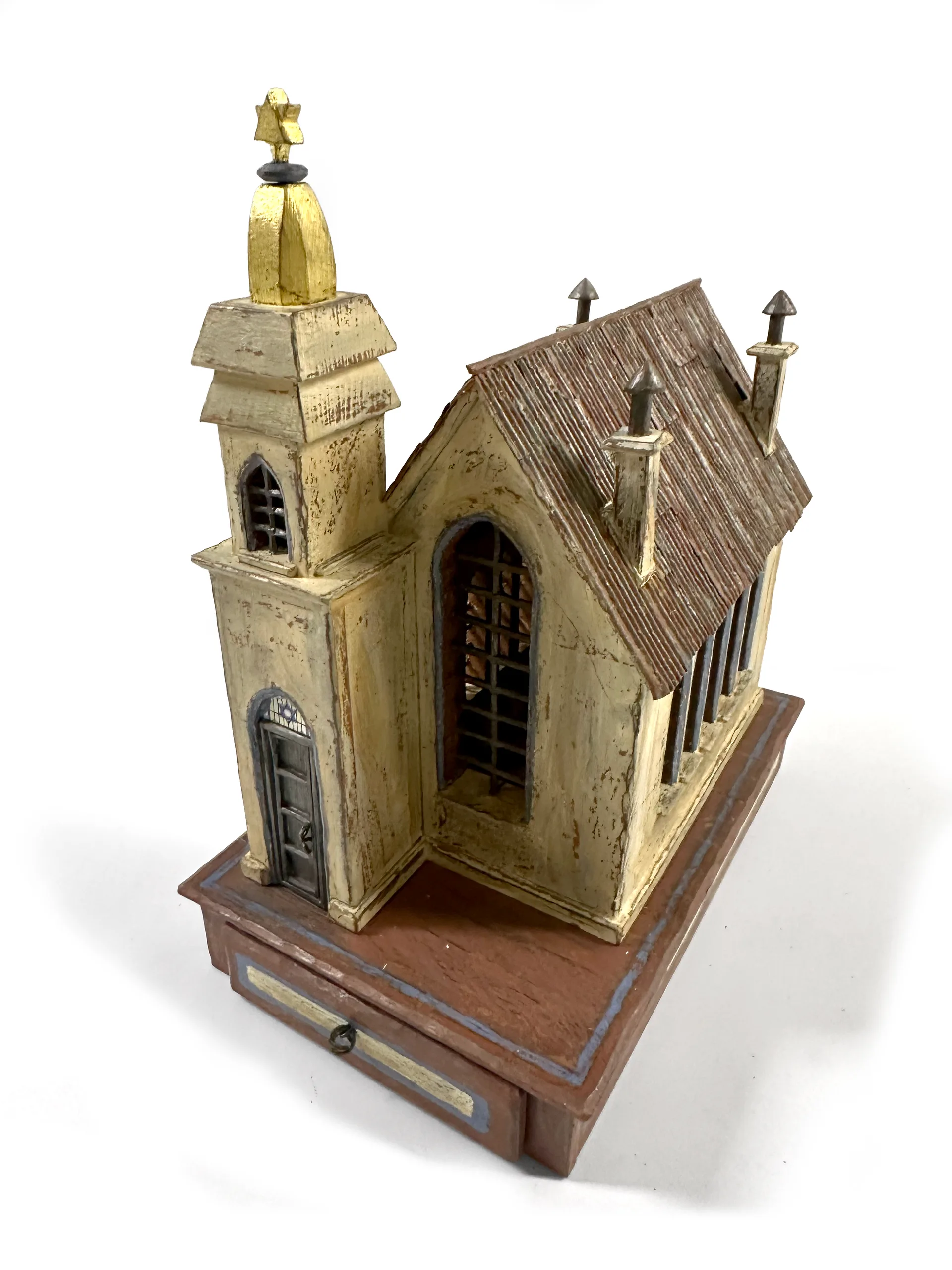
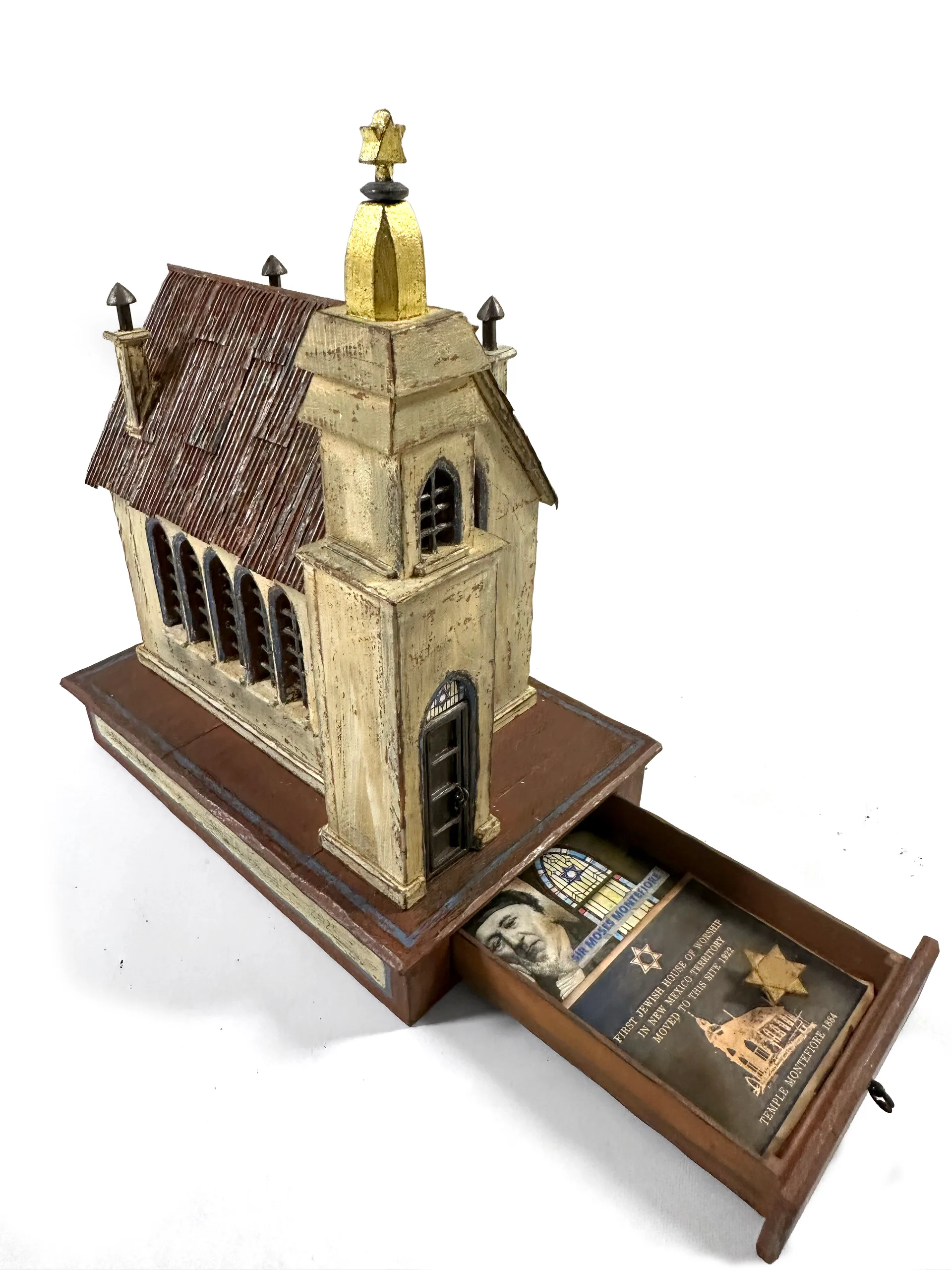
Synagogue Montefiore sculpture by Roberto Cardinale, three-quarter view showing the gabled roof, arched windows and gold-topped tower.

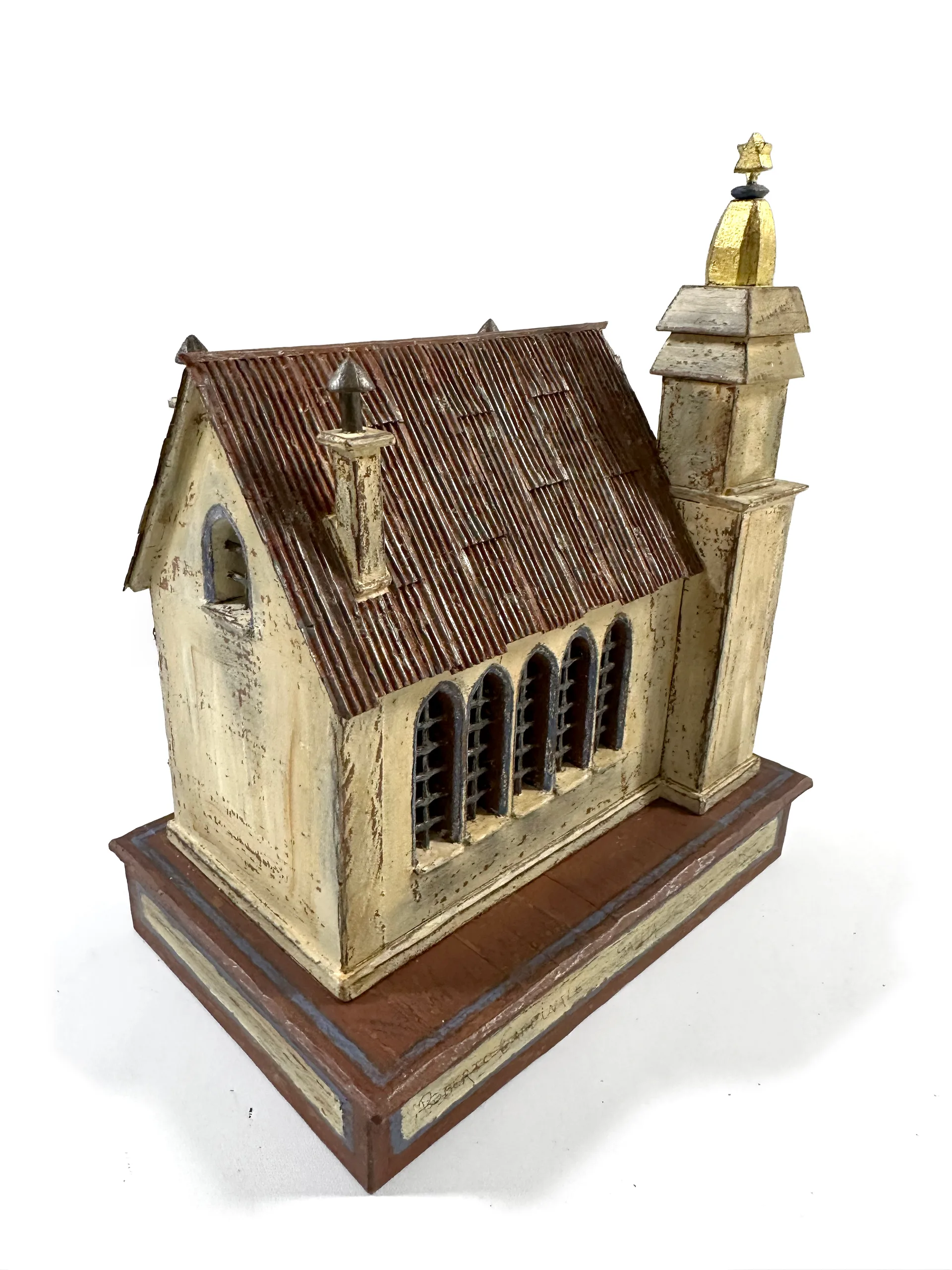
Synagogue Montefiore

Las Vegas, NM, built 1884

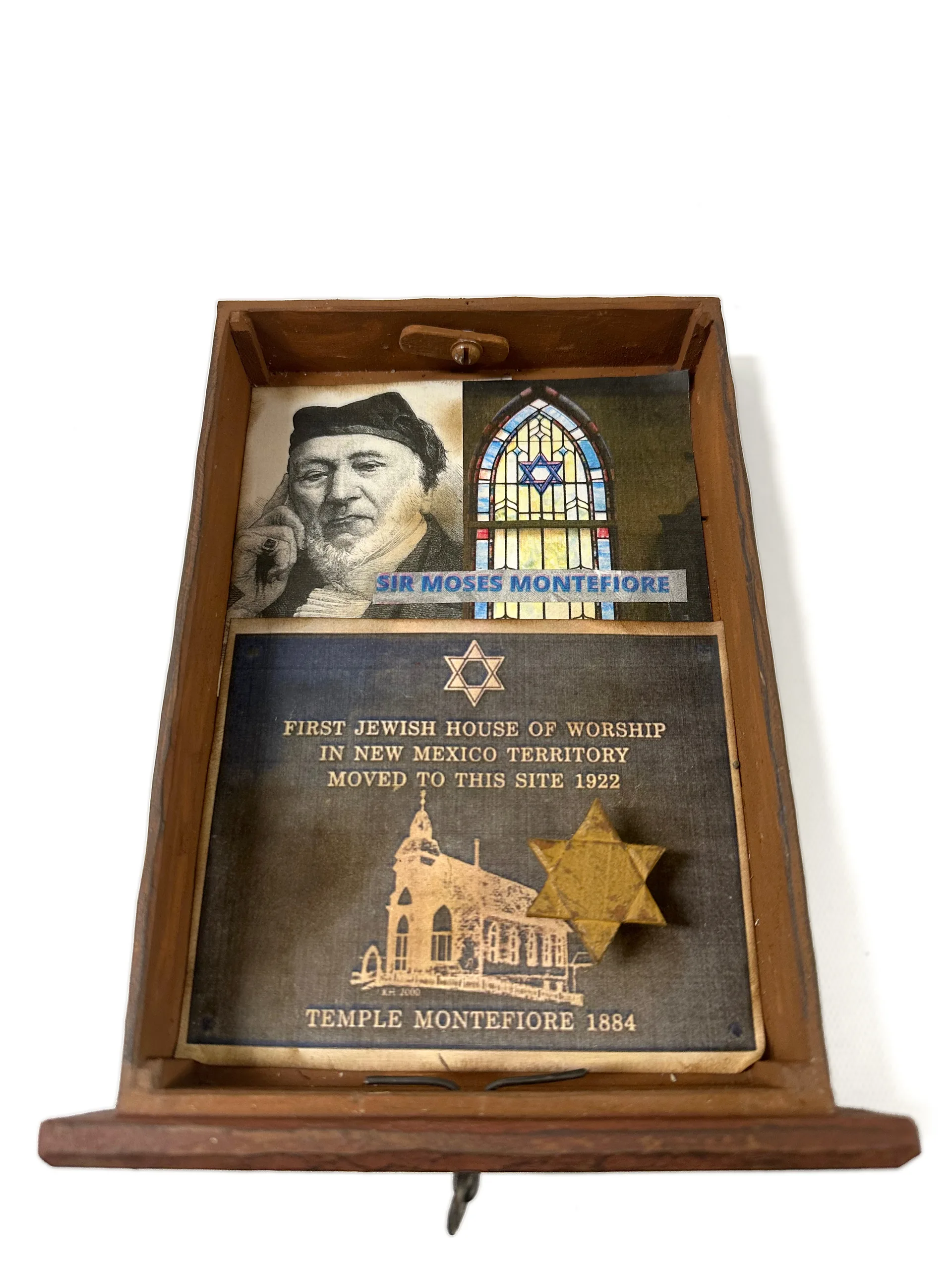
The first synagogue in New Mexico, despite extensive remodeling over the years, still stands today. Originally, the structure was relocated from its initial site and placed on the campus of Highlands University, where it served as a Catholic Newman Center for a period of time. Later, the building was reacquired by the Jewish community. It now continues to function as an active synagogue, maintaining its important role as a center for Jewish worship and community life.

8” W x 12” D x 14 ¼” H · Painted pine · 2025 · Roberto Cardinale, with drawer collage by PJ Cardinale

$2,800

Synagogue Montefiore sculpture from the front left, the drawer in the base closed. Synagogue Montefiore sculpture with the base drawer open, revealing PJ Cardinale’s collage. Detail of the drawer collage by PJ Cardinale, with a portrait of Sir Moses Montefiore and a plaque marking the first Jewish house of worship in New Mexico Territory.

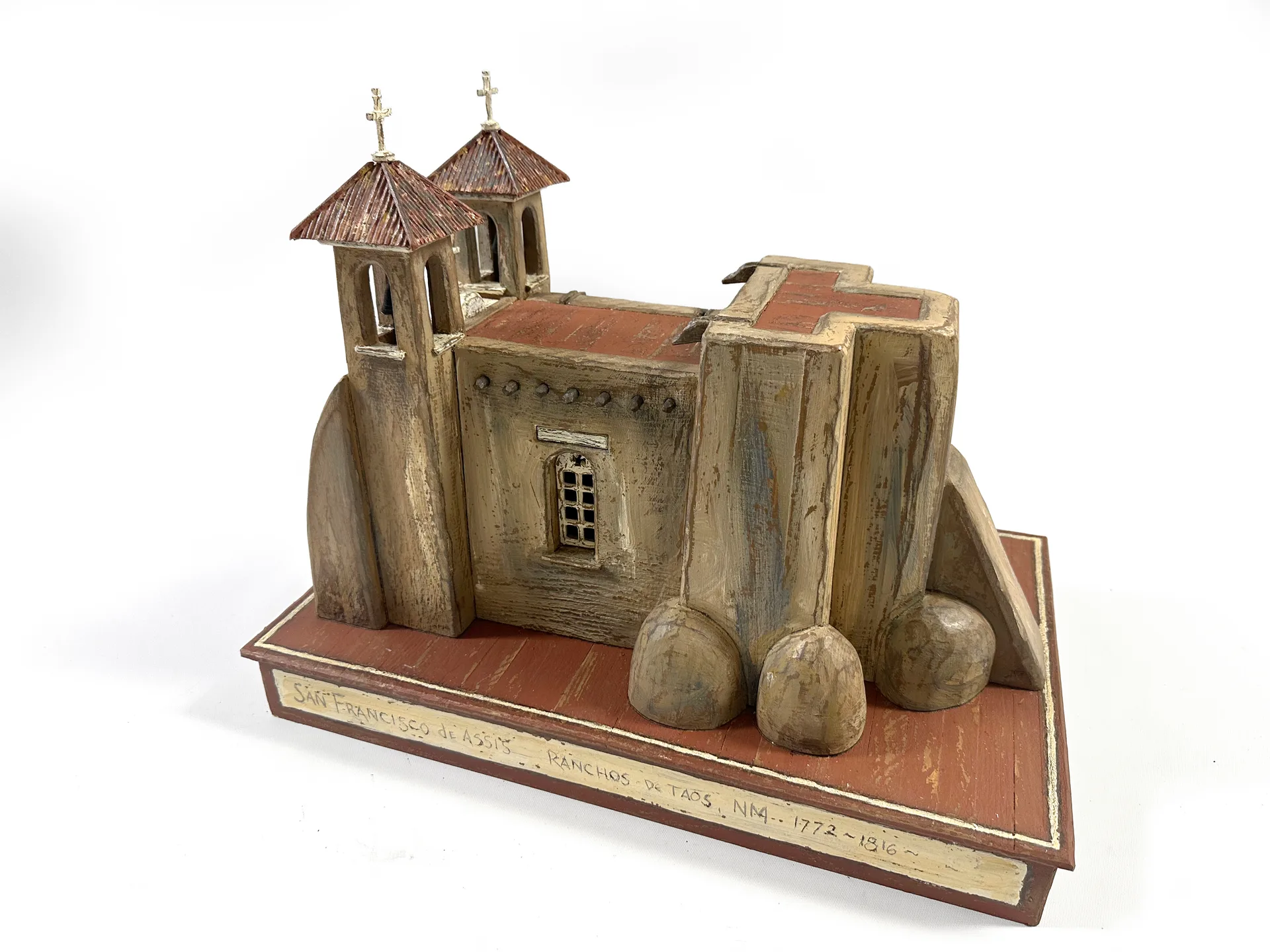
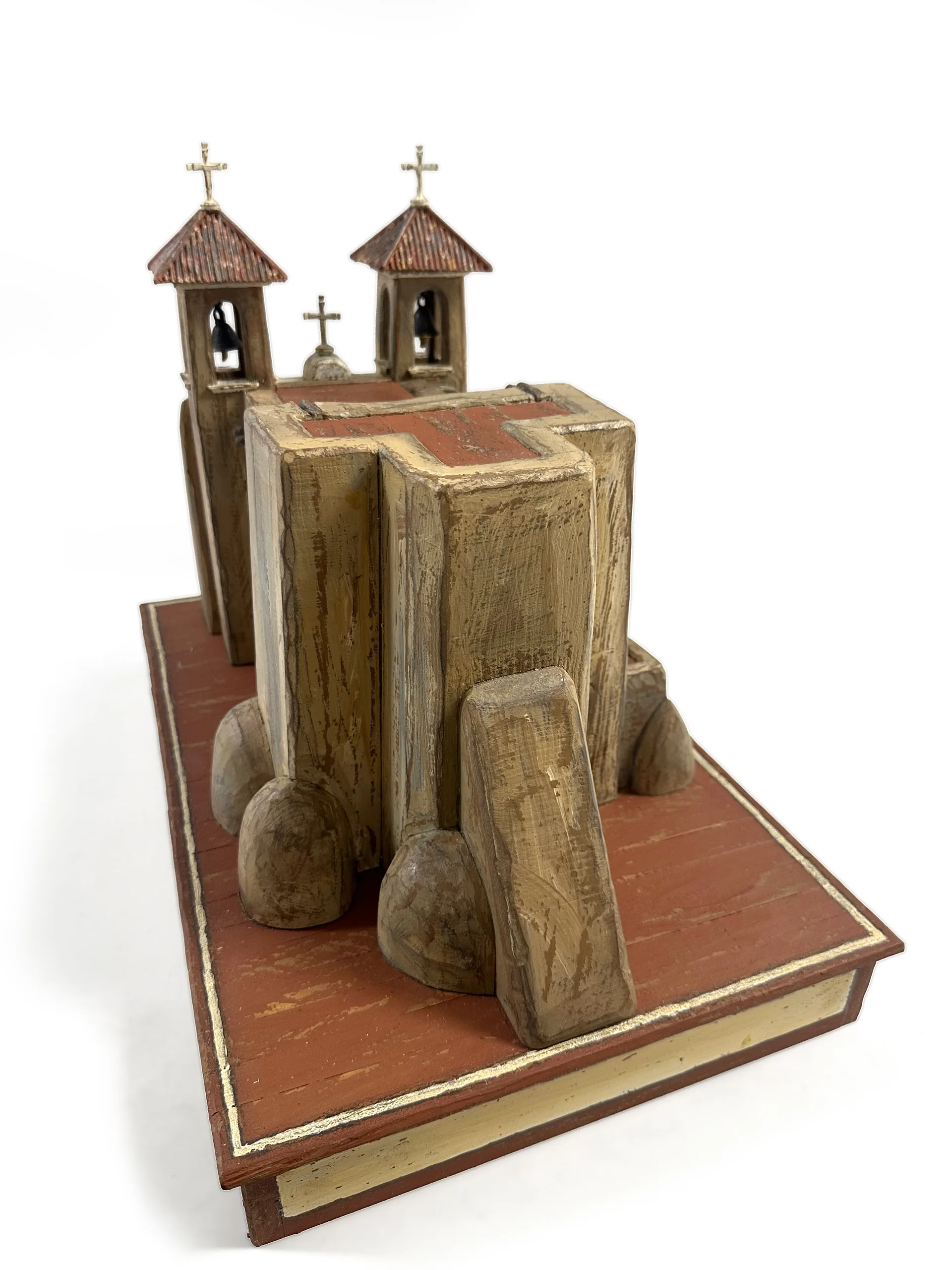
San Francisco de Asis sculpture by Roberto Cardinale, three-quarter view of the massive adobe buttresses at the apse.

San Francisco de Asis

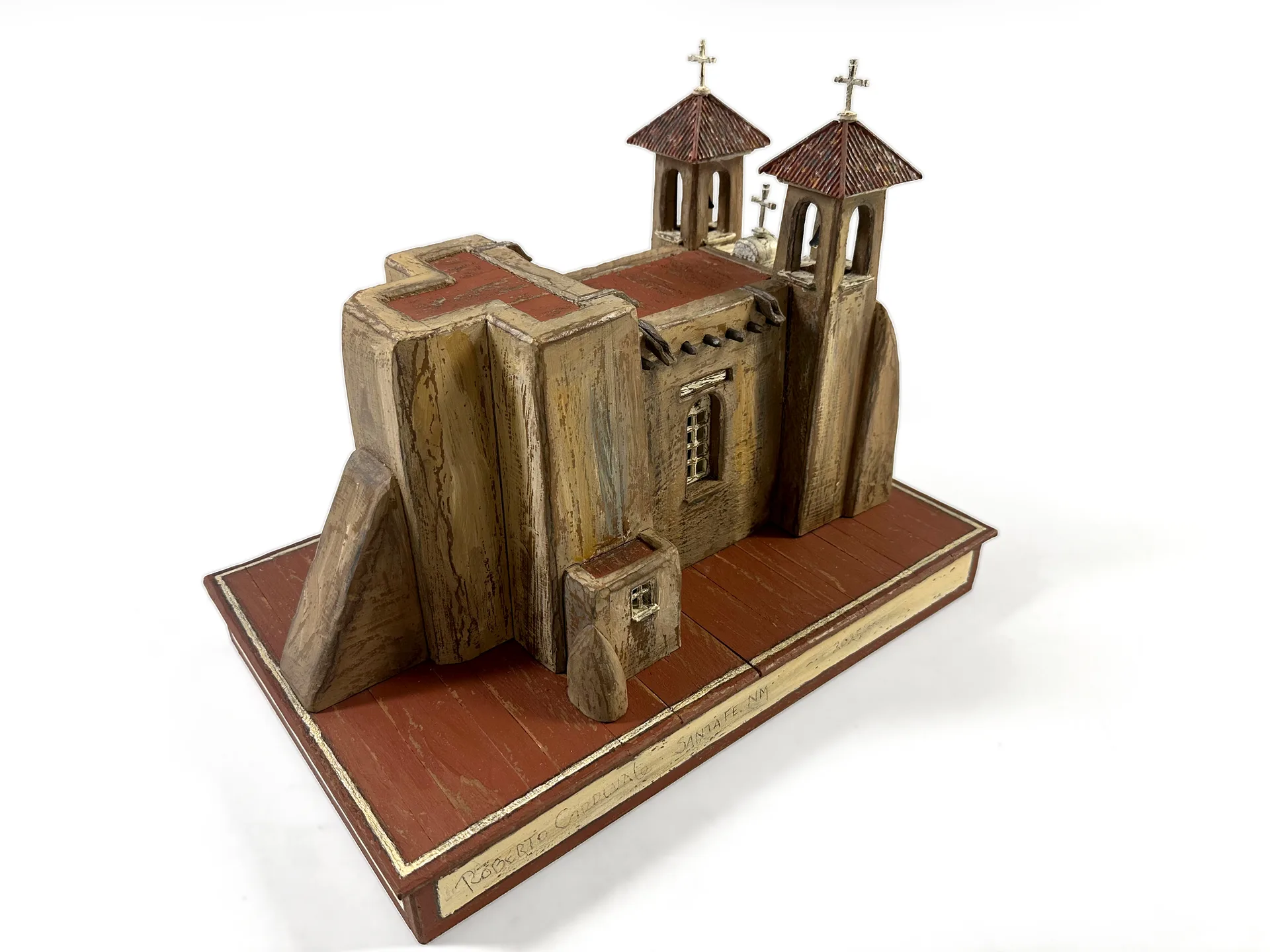
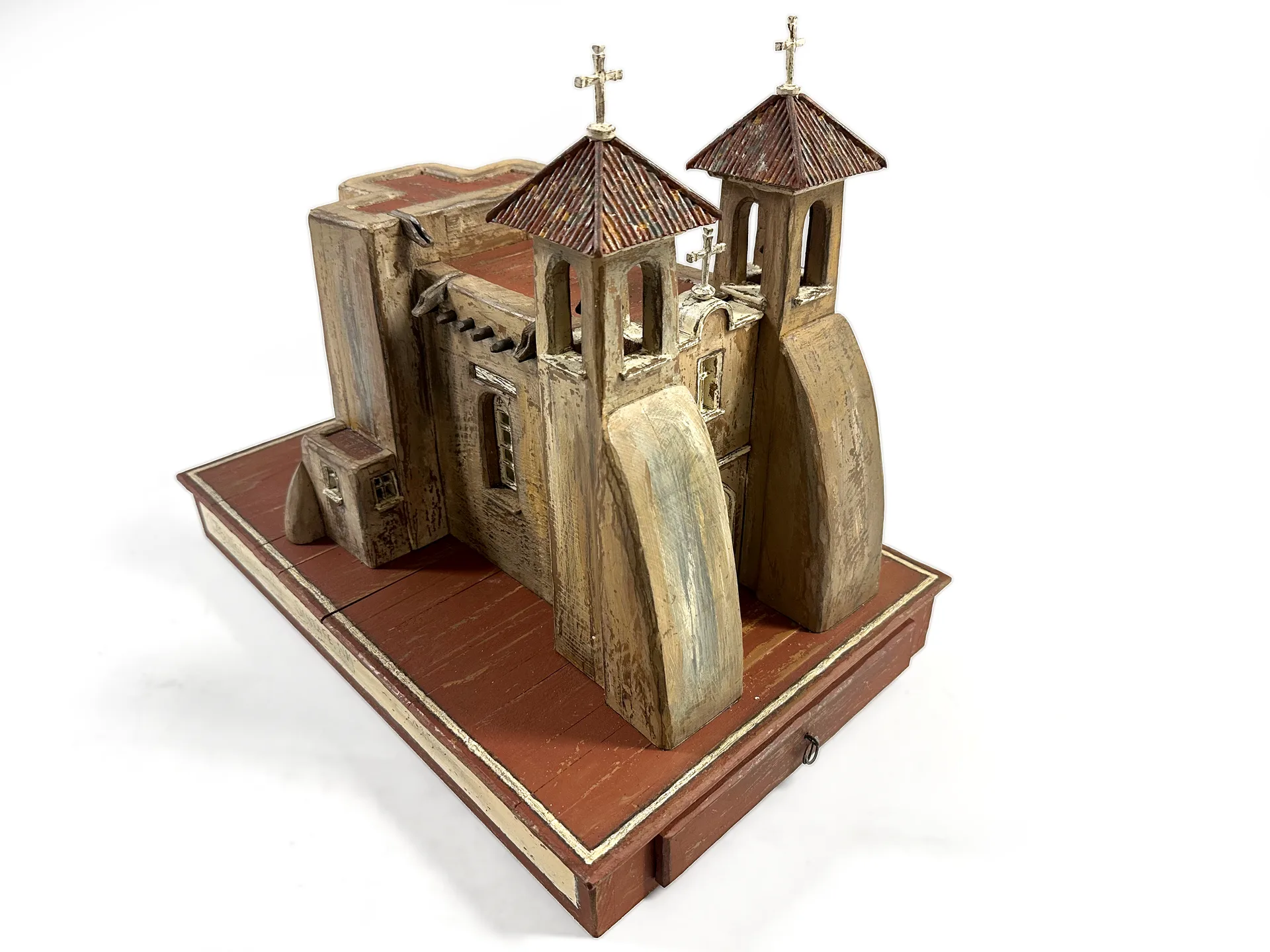
Ranchos de Taos, NM, built c. 1810

Located about three miles outside of Taos, New Mexico, this massive adobe structure was completed around 1810. The church has been in continuous use since it was completed. The apse (back of the church) with its massive stone and adobe buttresses is one of the most popular images of the Southwest and has been painted and photographed by such greats as Georgia O’Keeffe and Ansel Adams.

It is understandable why the apse of this mission church has been so often photographed and painted: it proclaims geometric satisfaction mixed with naive forthrightness.

— G. E. Kidder Smith

11 ½” W x 15 ½” D x 19” H · Painted pine · 2025 · Roberto Cardinale, with drawer collage by PJ Cardinale

$3,000

San Francisco de Asis sculpture seen from the front, with its twin bell towers and walled forecourt. The apse of the San Francisco de Asis sculpture, showing the stepped adobe buttresses from the side. San Francisco de Asis sculpture from the rear left, the buttresses casting shadow across the adobe wall.

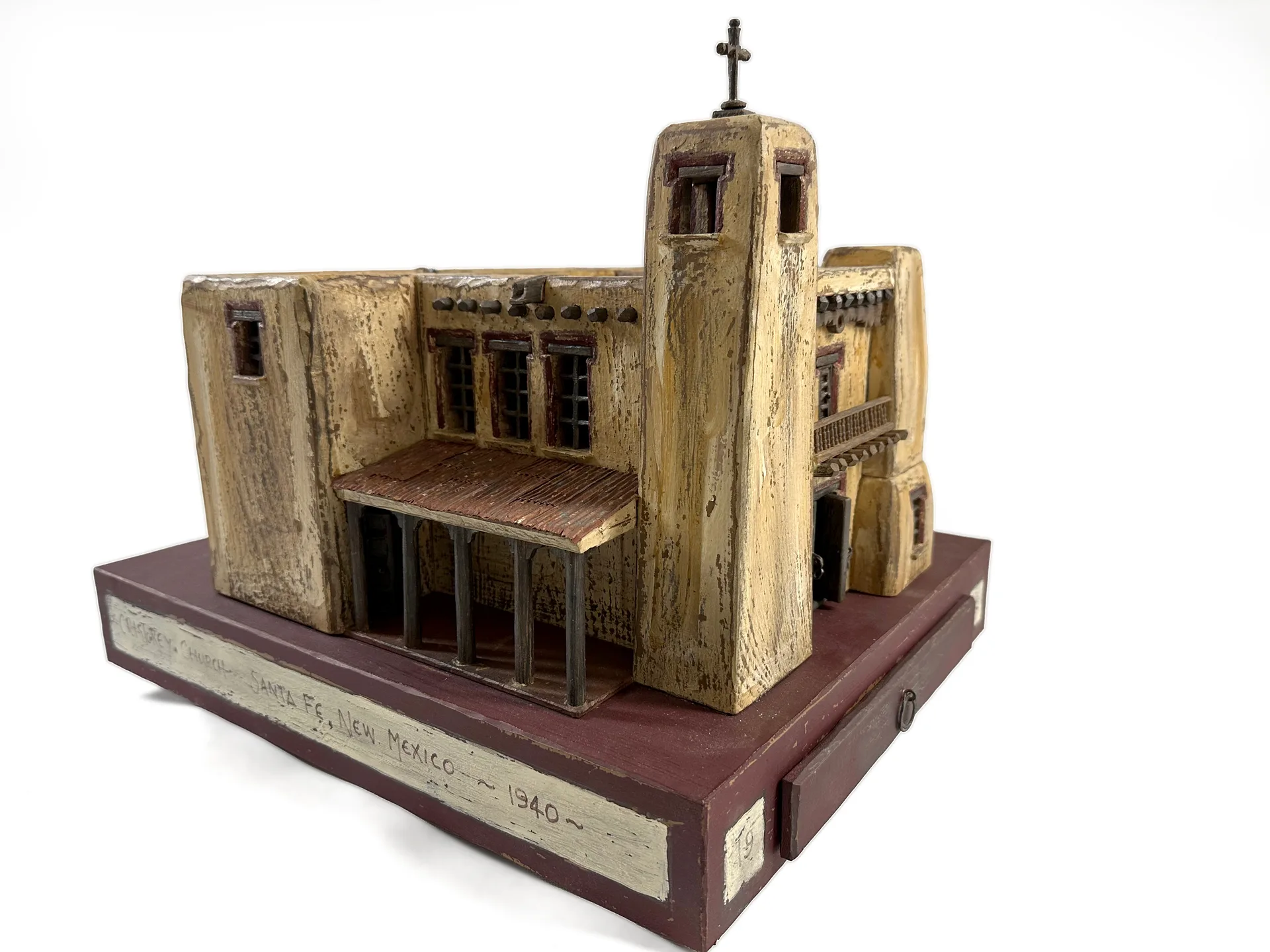
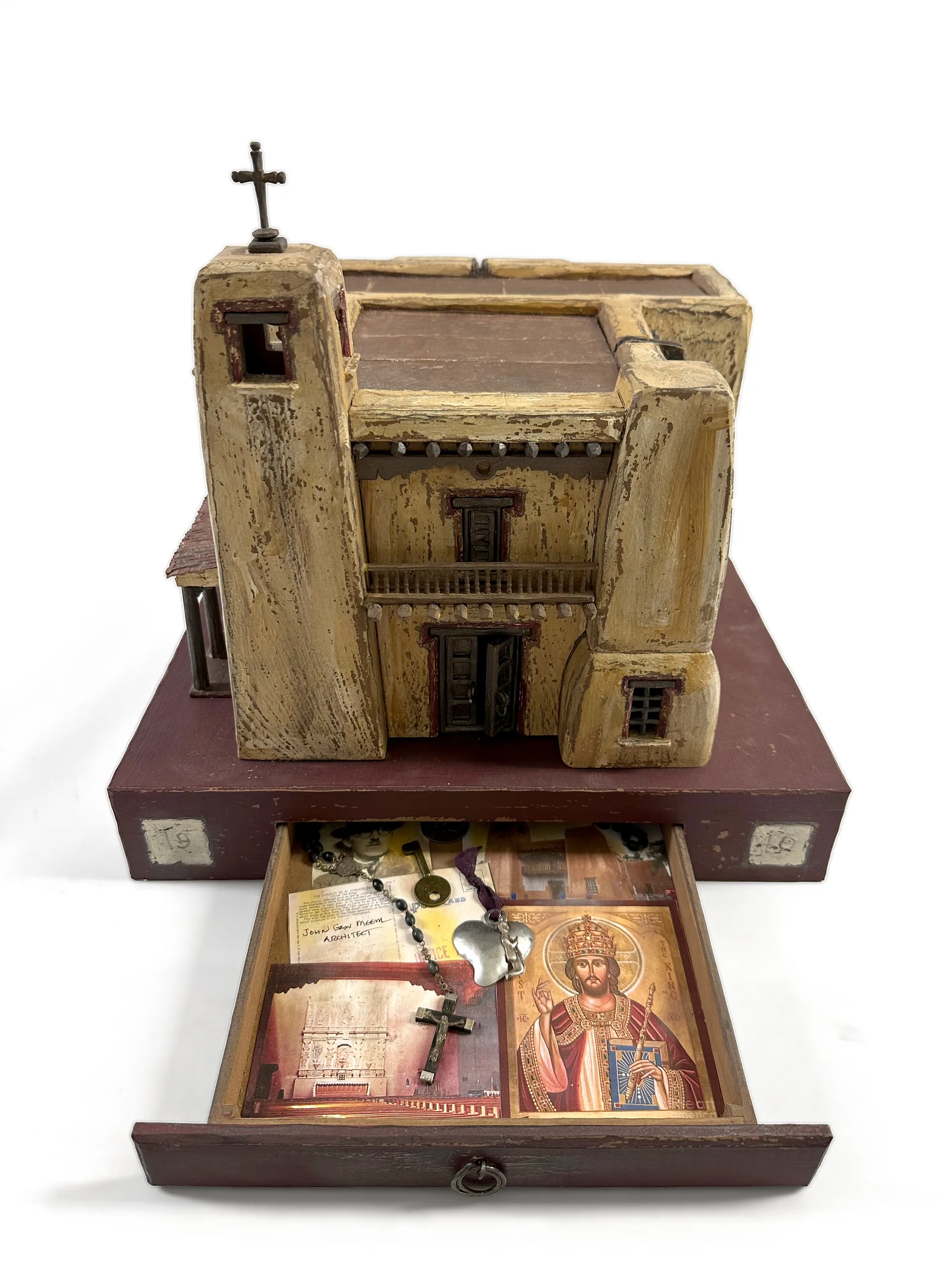
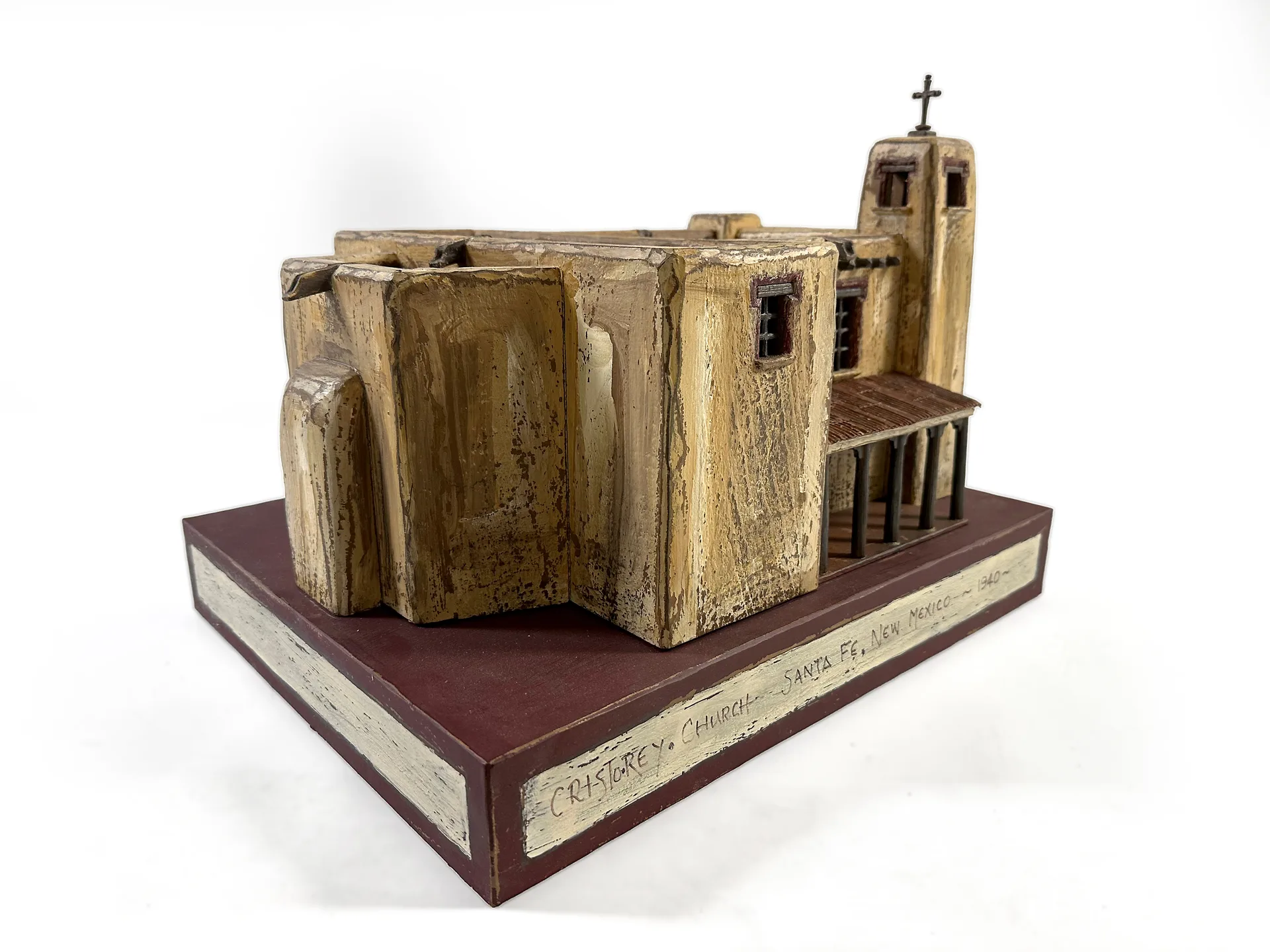
Cristo Rey Church sculpture by Roberto Cardinale, front three-quarter view showing the asymmetrical battered towers and the recessed balcony.

Cristo Rey Church

Santa Fe, NM, built 1940

Cristo Rey Church was designed by John Gaw Meem in the Pueblo Revival style, drawing inspiration from many of New Mexico’s historic Spanish missions. Like its antecedents, the church is built from adobe, though it is supported by a hidden steel frame rather than relying completely on traditional building techniques. Architecture critic Chris Wilson described the building as “the last, great adobe mission.” The facade is asymmetrical, with two battered towers of different heights separated by a recessed balcony above the main entrance.

14” W x 18” D x 13 ½” H · Painted pine · 2025 · Roberto Cardinale, with drawer collage by PJ Cardinale

$2,800

Cristo Rey Church sculpture with the base drawer open, revealing PJ Cardinale’s collage of devotional images. Cristo Rey Church sculpture from the rear, showing the long adobe nave and stepped roofline.

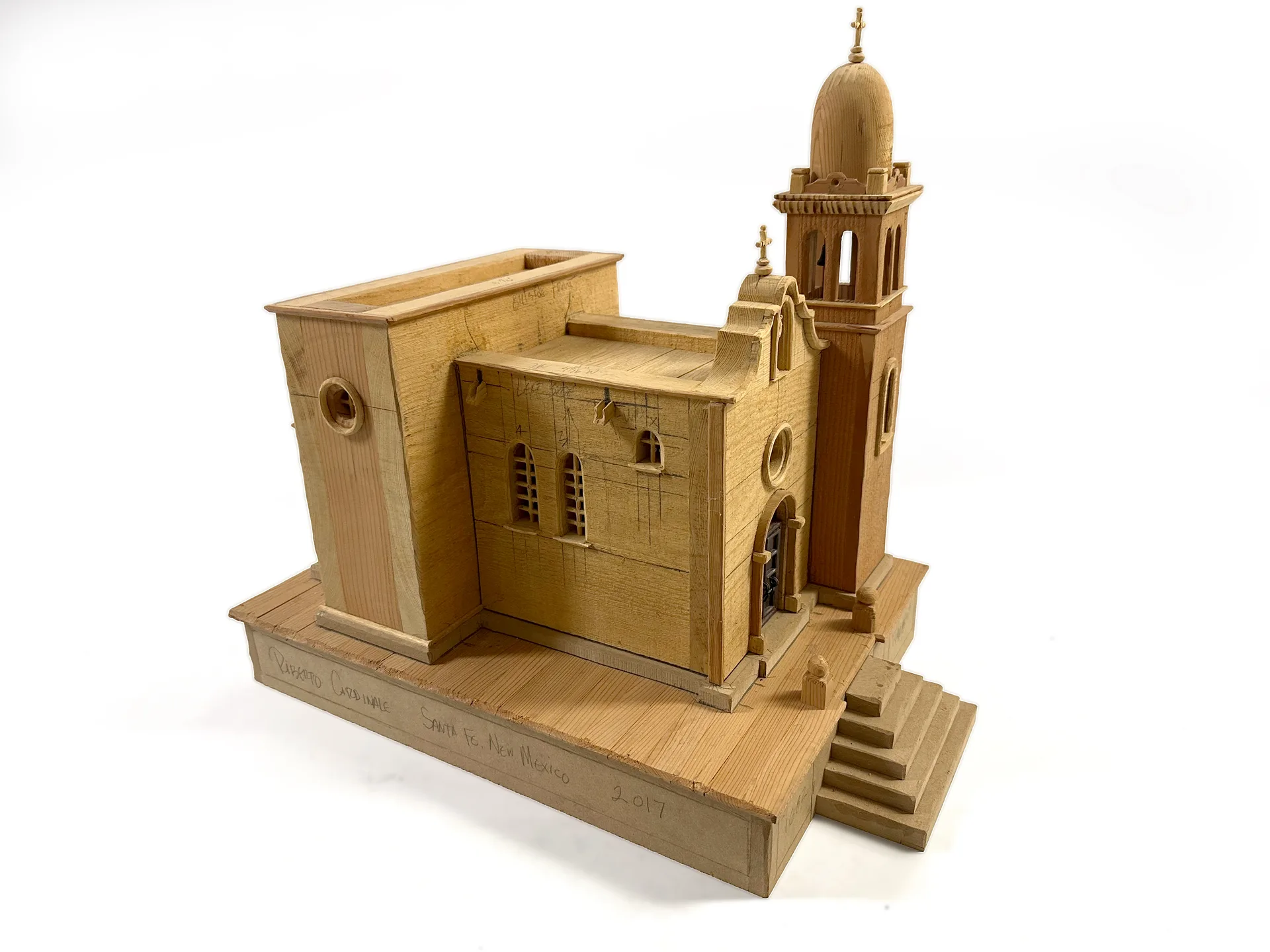
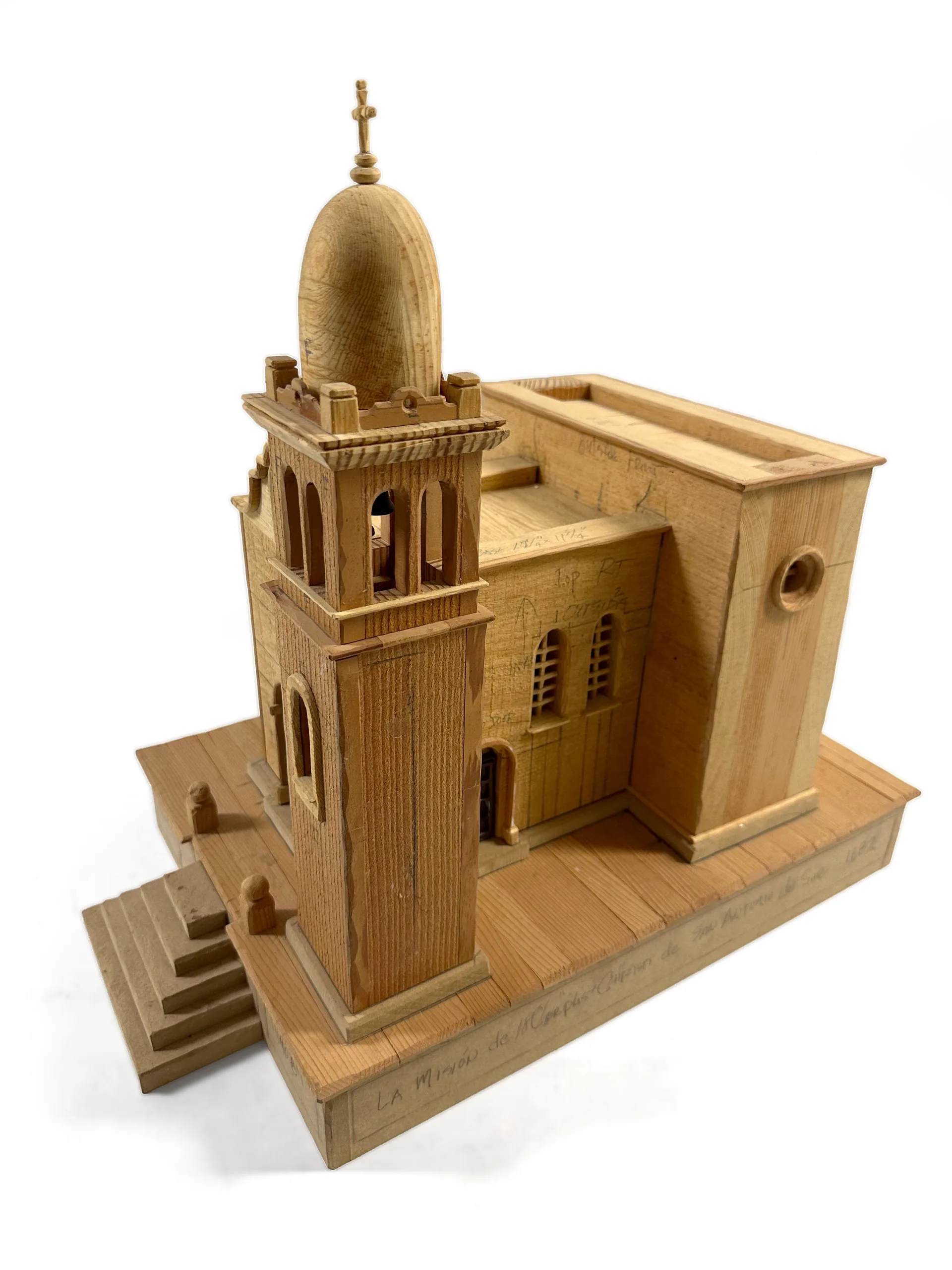
La Misión del Corpus Cristi de San Antonio del Sur sculpture by Roberto Cardinale in unpainted pine, showing the domed bell tower and entry stairs.

La Misión del Corpus Cristi de San Antonio del Sur

El Paso, TX, built 1682

The Ysleta Mission, located in the Ysleta del Sur Pueblo within the municipality of El Paso, Texas, is recognized as the oldest continuously operated parish in the State of Texas. I have chosen to leave this church sculpture unfinished to allow the viewer to see how the piece evolved in the making process.

13” W x 21” D x 19 ½” H · Pine (unpainted) · 2017 · Roberto Cardinale

$2,400

The unpainted pine mission sculpture from the side, its exposed joinery showing how the piece was made.

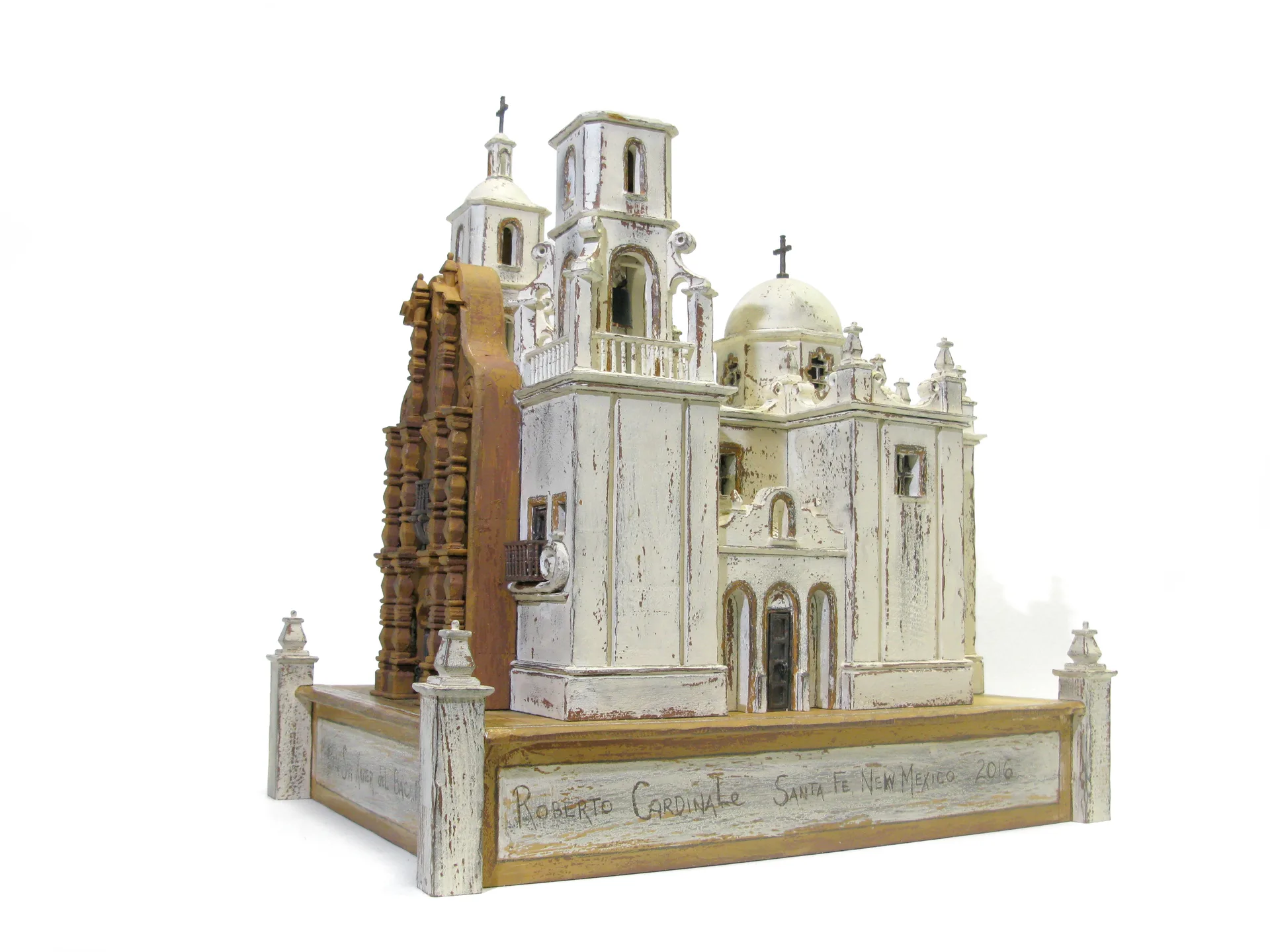
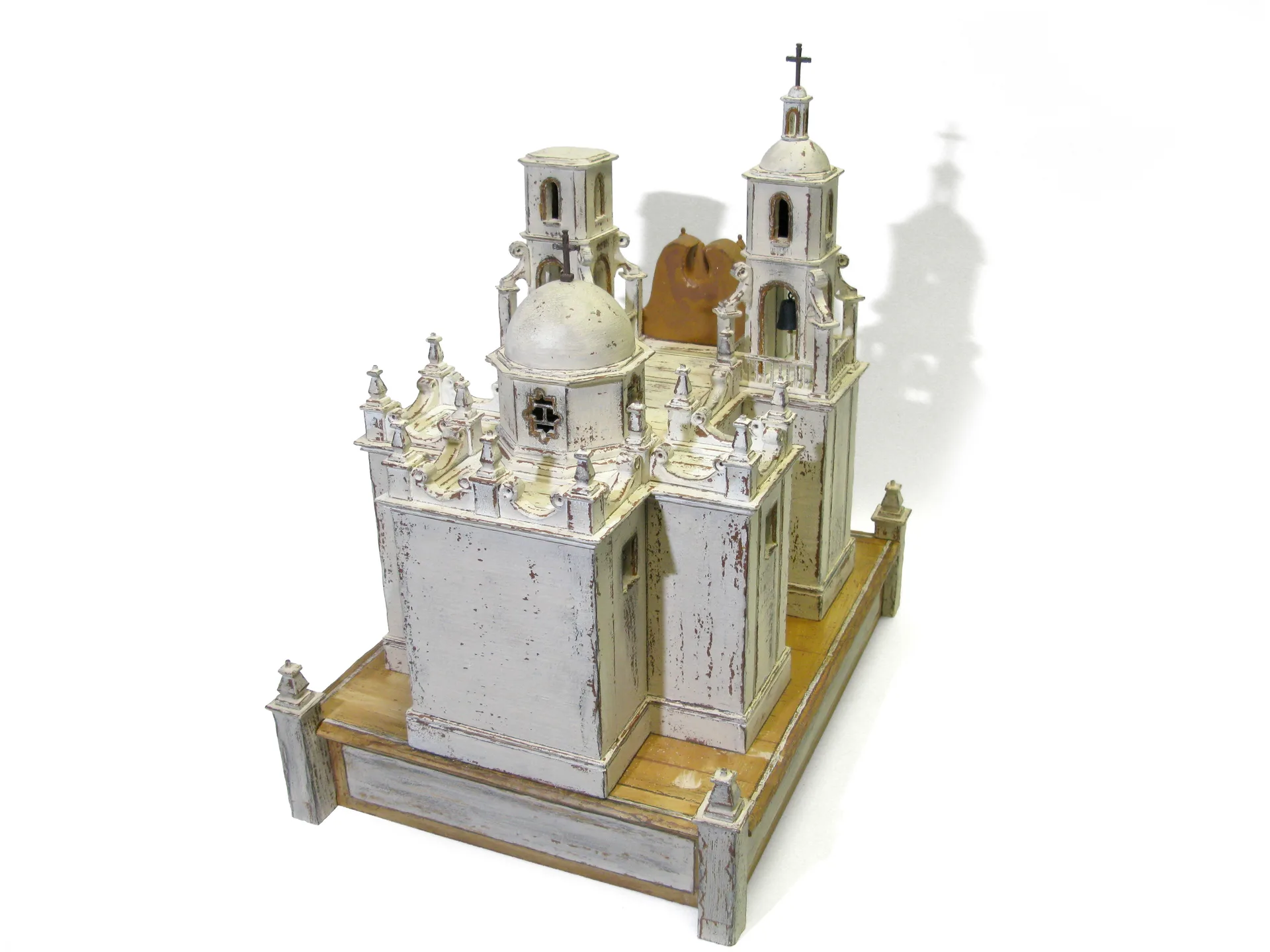
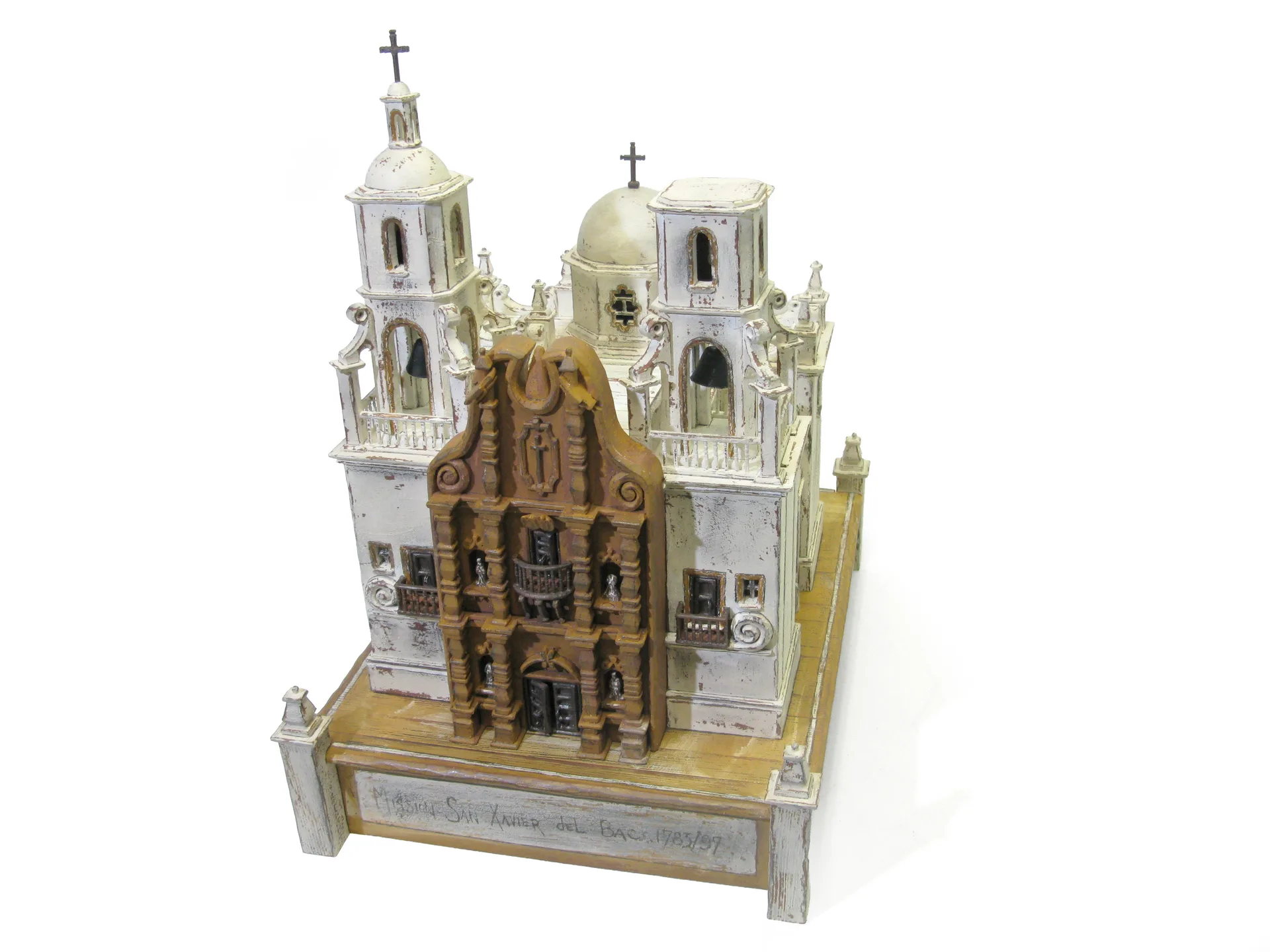
Mission San Xavier del Bac sculpture by Roberto Cardinale, front three-quarter view of the white mission with its two towers, one left unfinished as at the original.

Mission San Xavier del Bac

Tucson, AZ, built c. 1783

Mission San Xavier del Bac, founded in the late 17th century and later constructed in its present form by Tohono O’odham artisans, is known as the “White Dove of the Desert.”

14” W x 19” D x 21” H · Painted pine · 2016 · Roberto Cardinale

Not for Sale · Commissions welcome

Mission San Xavier del Bac sculpture from the left, showing the domed chapels and the low courtyard wall. The carved and painted entry portal of the Mission San Xavier del Bac sculpture, seen straight on.

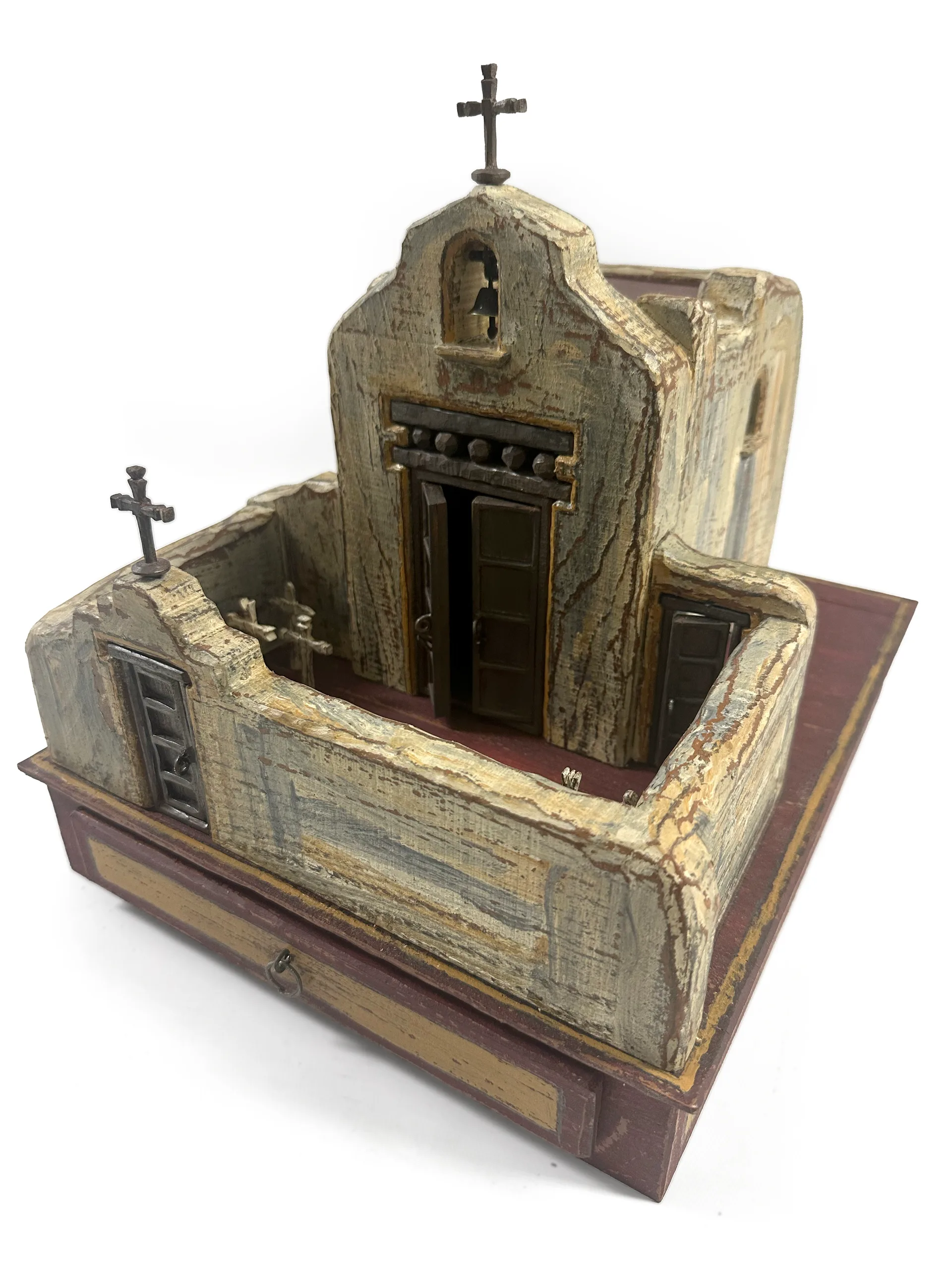
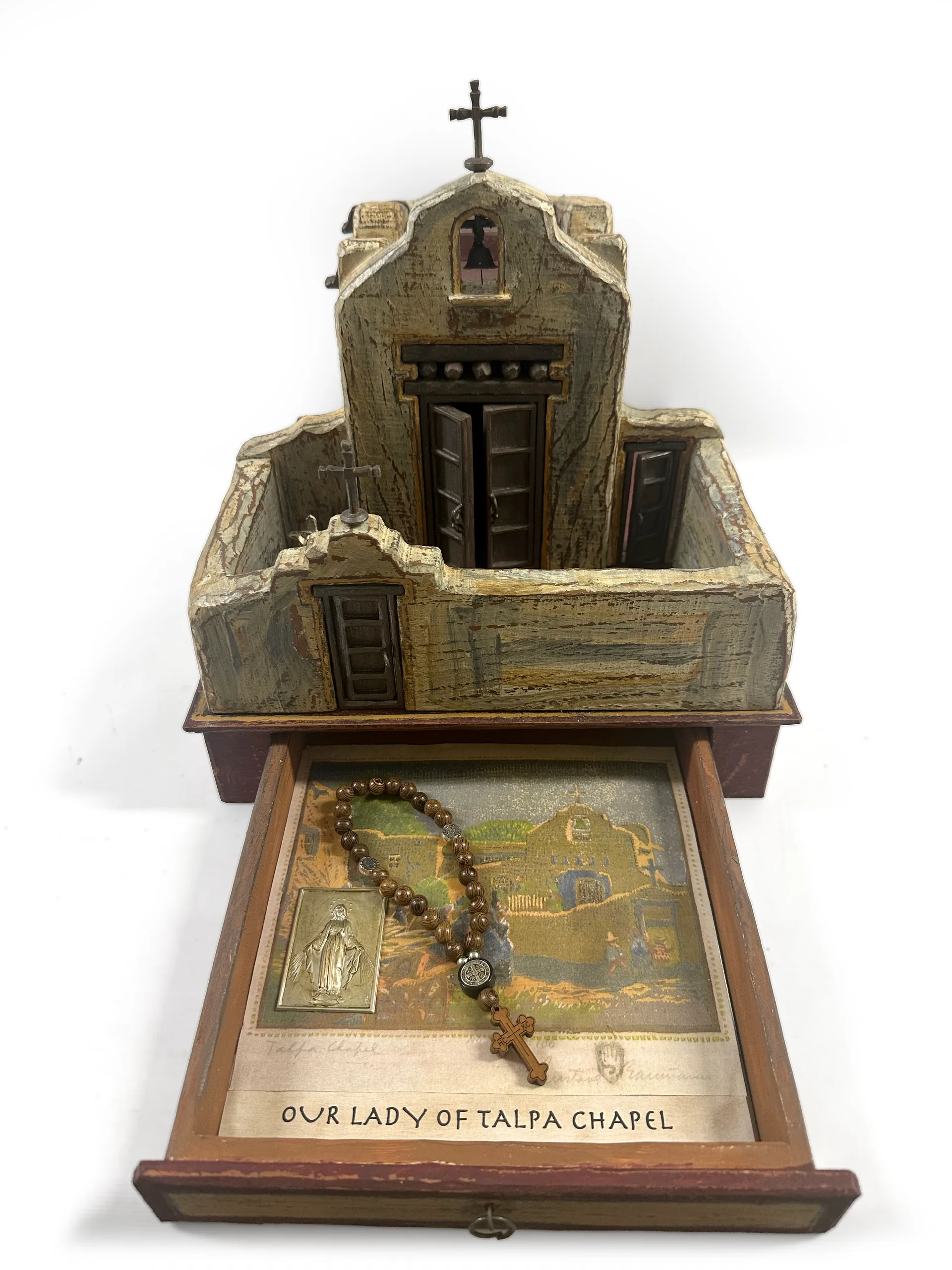
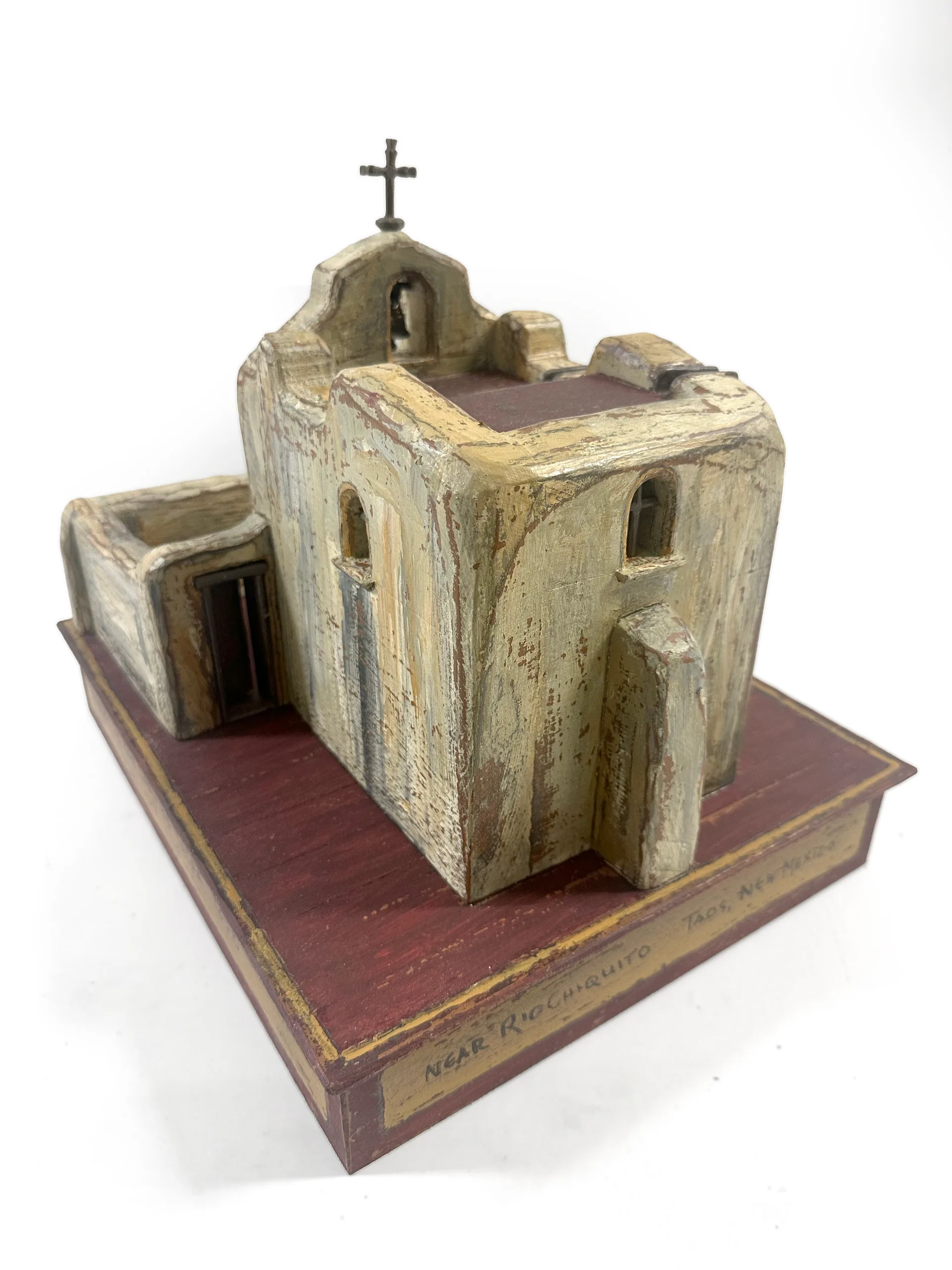
The Talpa Chapel sculpture by Roberto Cardinale, showing the curved adobe parapet, the bell cross and the walled courtyard.

The Talpa Chapel

Rio Chiquito, near Taos, NM, built 1837

The Talpa Chapel near Taos, built in the early 1800s by the Martinez, Tafoya, and Duran families, rises from sunbaked adobe, simple and enduring. Thick walls, rough-hewn beams, and a modest bell tower mark generations of care and faith. In the base, a small drawer holds a collage of Catholic devotional objects—rosaries, medals, and faded prayer cards—kept through centuries. As a sculptor, I work on the textures and shadows, trying to capture both the history and the steadfast devotion etched into every surface.

11” W x 13 ½” D x 11 ½” H · Painted pine · 2025 · Roberto Cardinale, with drawer collage by PJ Cardinale

$2,800

The Talpa Chapel sculpture with the base drawer open, showing PJ Cardinale’s collage of rosaries and devotional cards labelled Our Lady of Talpa Chapel. The Talpa Chapel sculpture from the rear, showing the sacristy and the thick adobe walls.

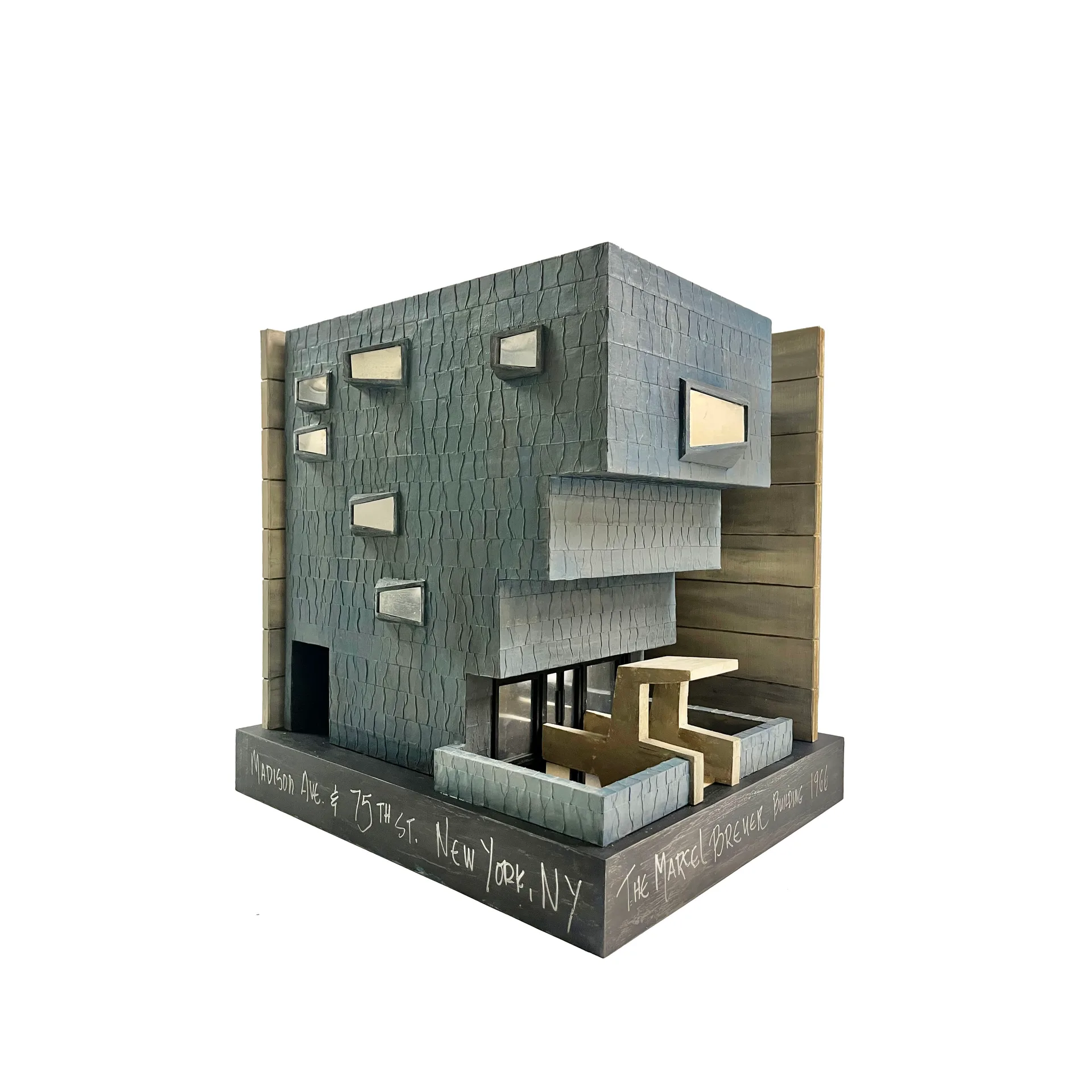
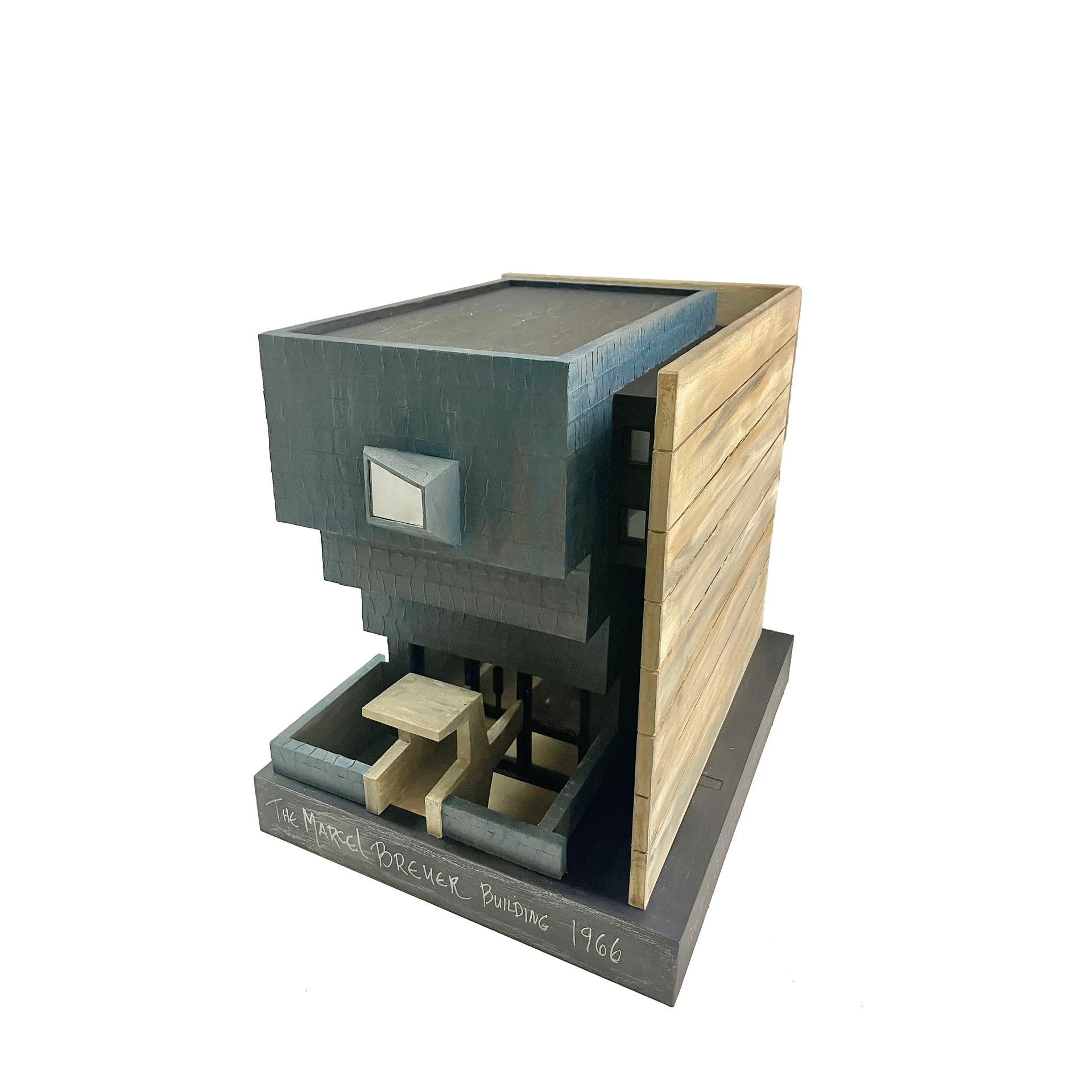
The Marcel Breuer Building sculpture by Roberto Cardinale, showing the inverted-ziggurat facade cantilevered over Madison Avenue and its angled windows.

The Marcel Breuer Building

New York, NY, built 1966

Originally the Whitney Museum of American Art, at 75th Street and Madison Avenue. Designed by architect Marcel Breuer, the former Whitney Museum of American Art stands as a landmark of modernist architecture. Its bold, inverted-ziggurat form projects outward over Madison Avenue, creating a sculptural presence that both anchors and challenges its urban setting. Breuer’s design conveys a sense of weight and permanence, while the asymmetrical window openings are set like jewels on the exterior walls. The building remains one of Breuer’s most influential works, exemplifying his commitment to material honesty, human scale, and expressive structural form.

16” W x 18 ½” D x 19” H · Painted pine and MDF (medium-density fiberboard) · 2022 · Roberto Cardinale

$6,000

The Marcel Breuer Building sculpture from the side with the base drawer open, showing the sunken entry bridge.

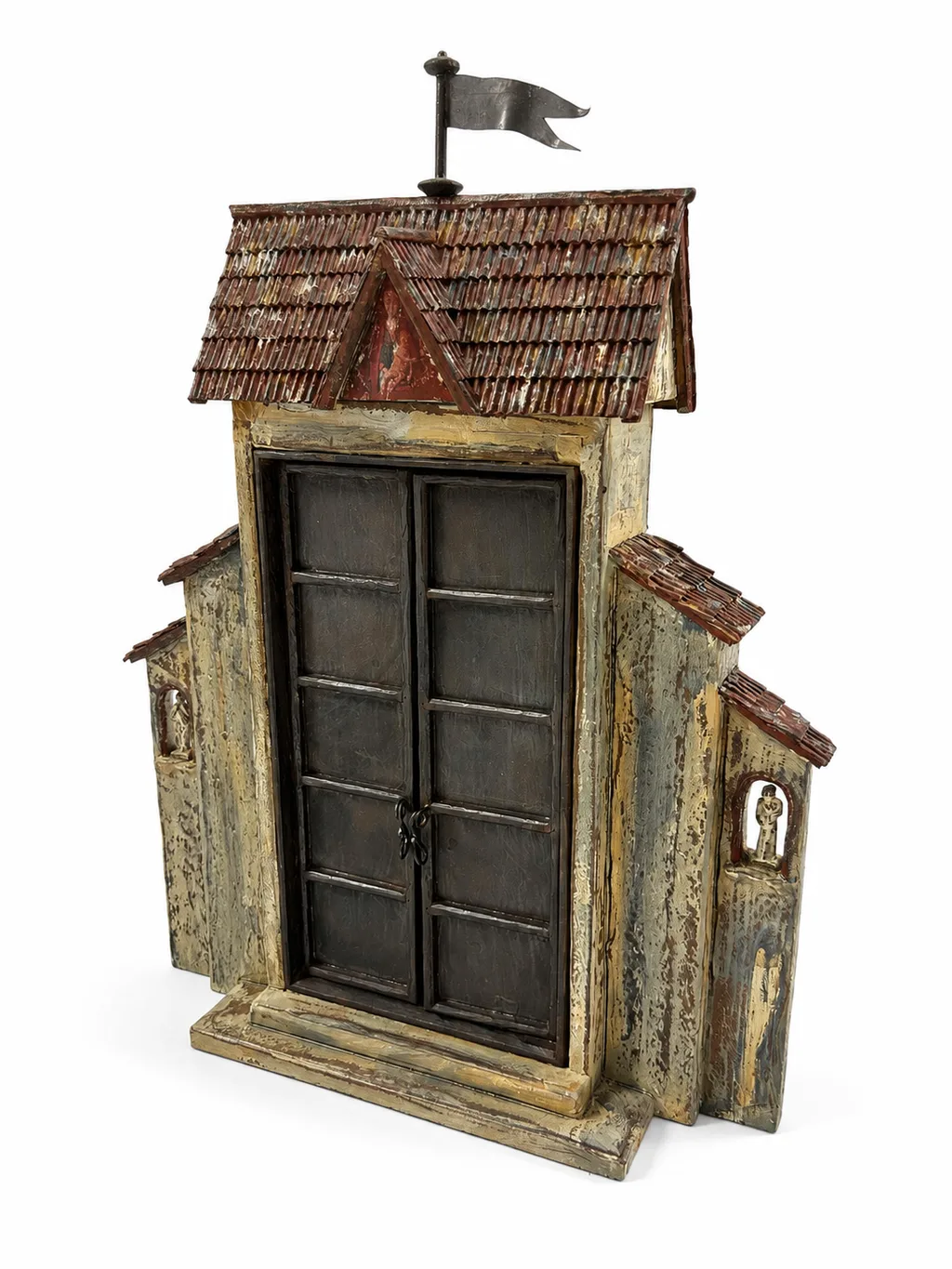
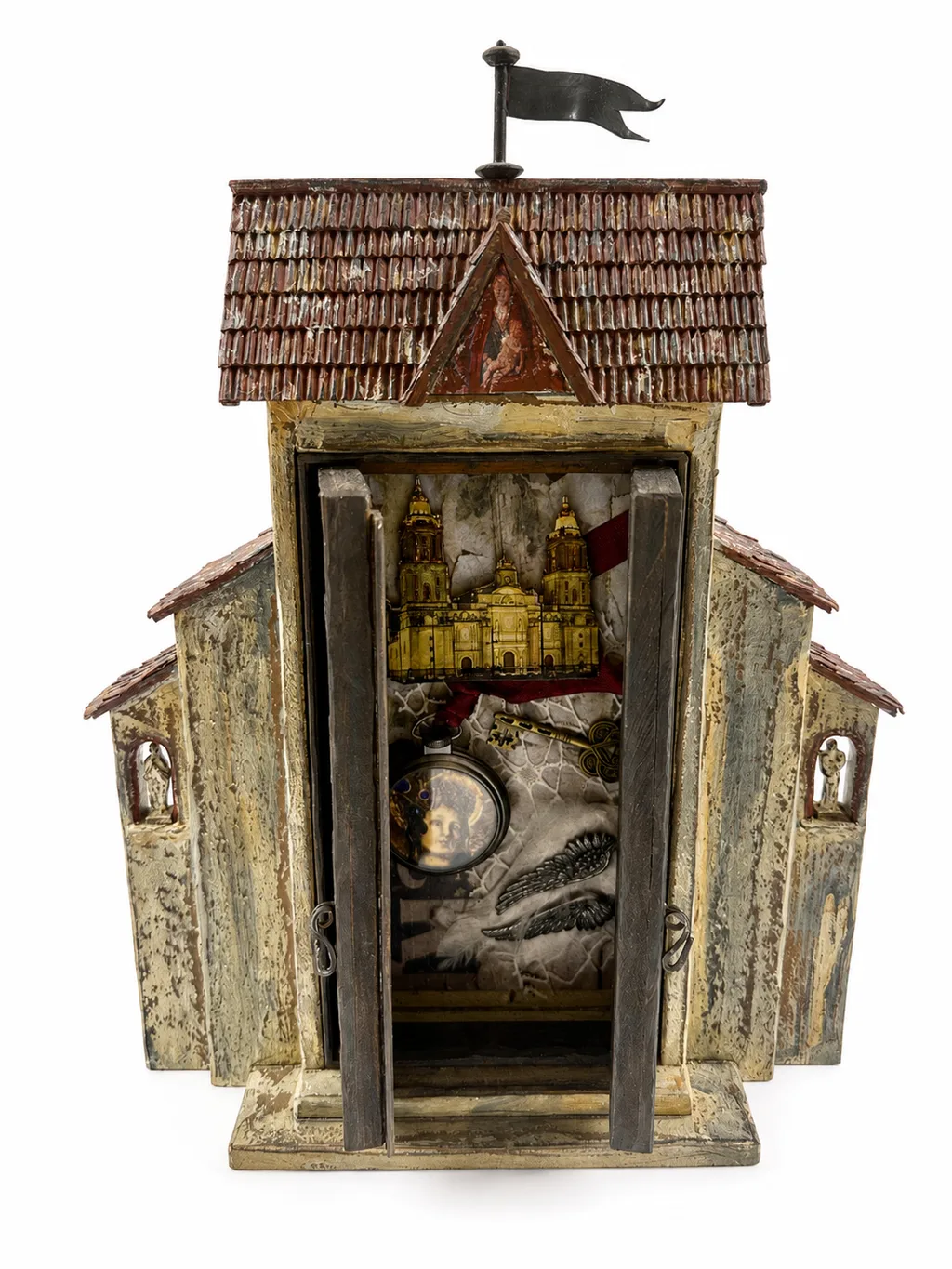
The Madonna Gate sculpture by Roberto Cardinale, a medieval city gate with a tiled roof and pennant, its doors closed.

The Madonna Gate

after the Passion of Christ by Hans Memling, 1470

The painting shows Christ being led out of the medieval city gate and up the hill to his Crucifixion. The painting is now in Turin, Italy.

10” W x 3 ¼” D x 13 ¼” H · Painted pine · 2024 · Roberto Cardinale, with interior collage by PJ Cardinale

$1,800

The Madonna Gate sculpture with its doors open, revealing PJ Cardinale’s interior collage after Memling’s Passion of Christ.

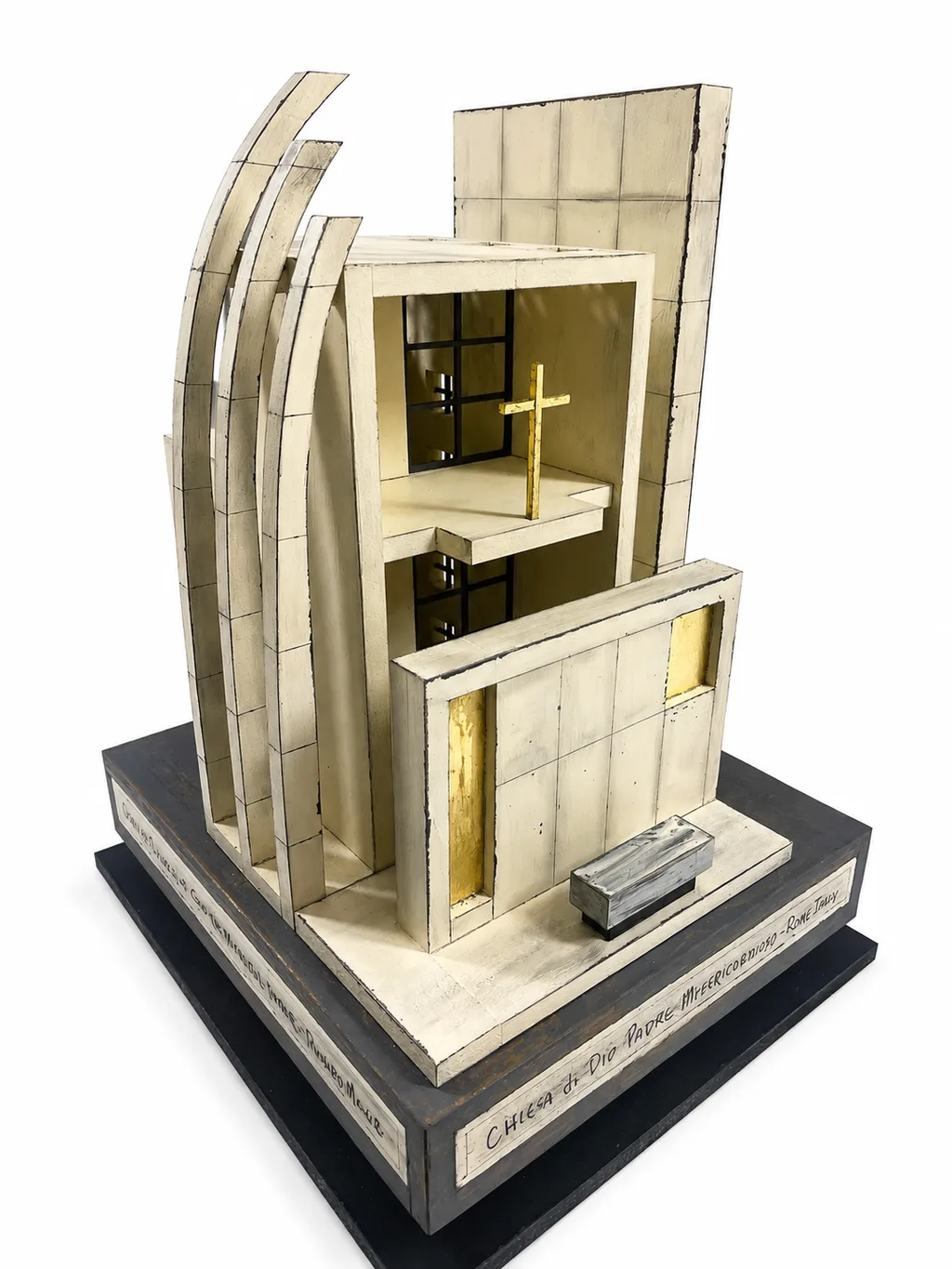
The Jubilee Church sculpture by Roberto Cardinale, showing Richard Meier’s three curved white shells and the gold-leafed interior details.

The Jubilee Church

Rome, Italy, built 2000

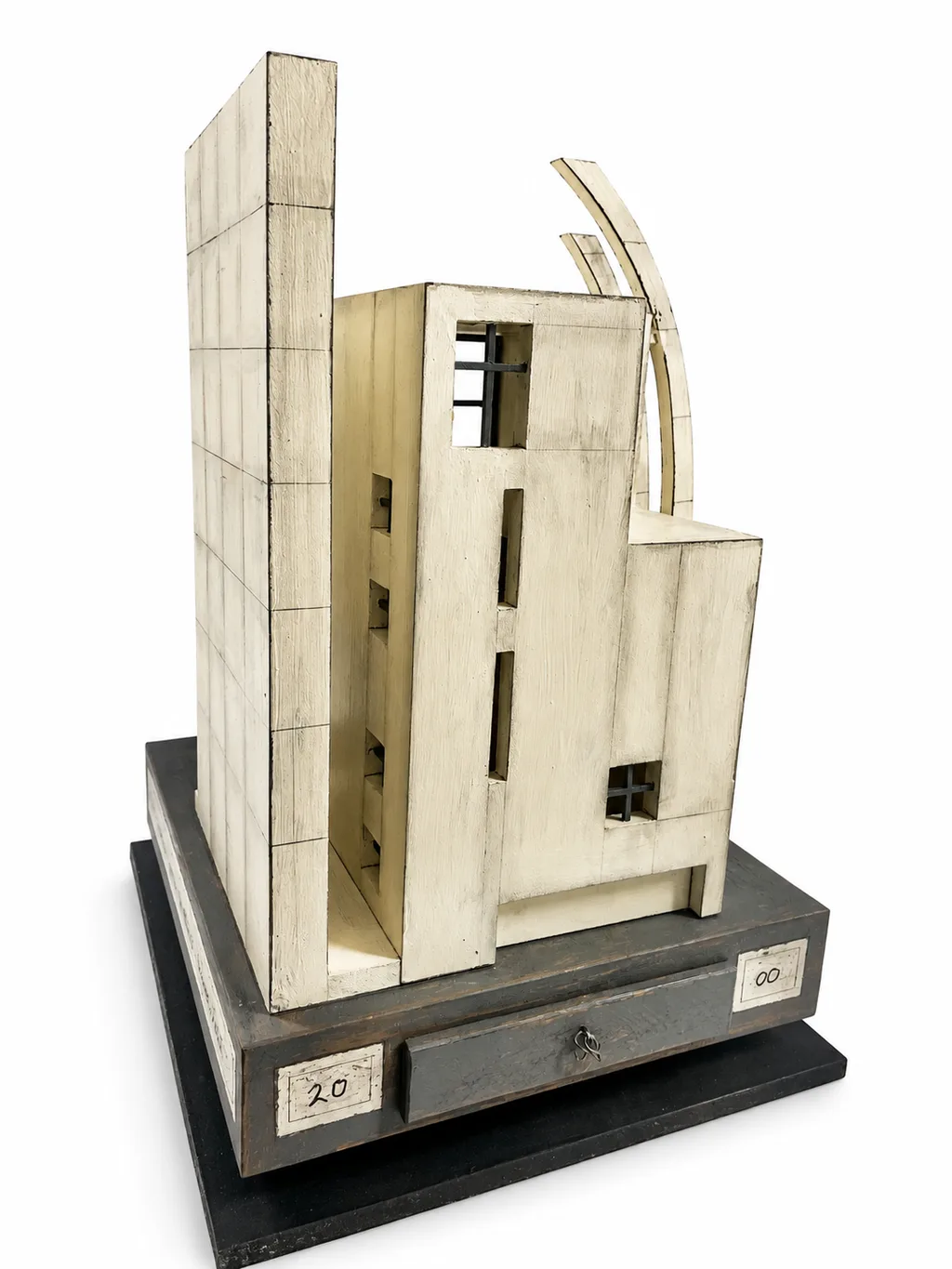
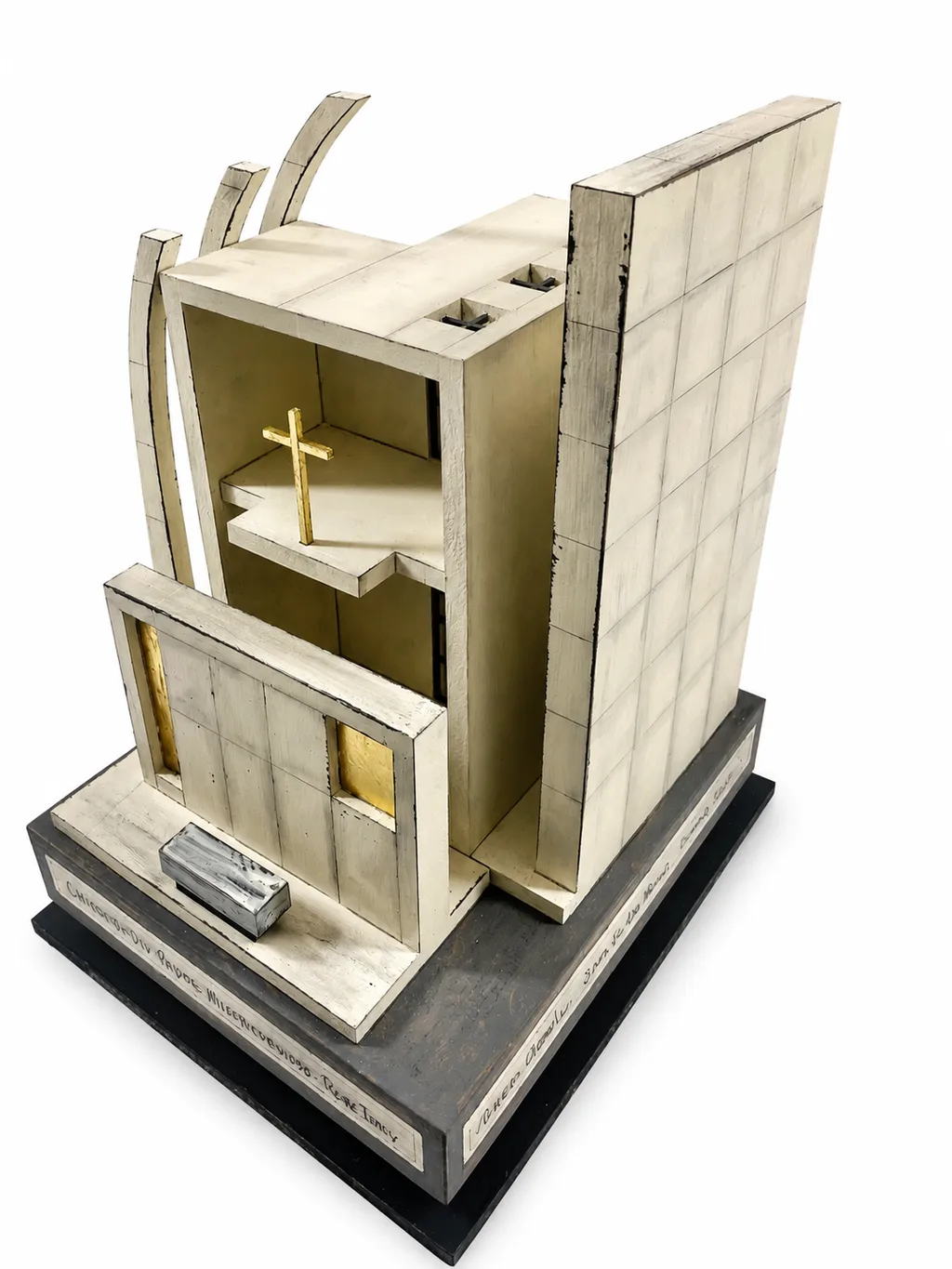
Chiesa di Dio Padre Misericordioso — the Church of God the Merciful Father — by Richard Meier, architect. Striving to capture the emotion and history that is imbued in the structure itself, this piece uses the extraordinary, overlapping façade, evoking the cosmic geometry of the Renaissance. Upon a closer look, soft mixtures of color and texture give the work a light and delicate appearance, with 22K gold leaf to emphasize selected details. This eye-catching sculpture sits attached to a swivel platform, allowing viewing from every angle. All expertly and exquisitely honoring scale and proportion of the exterior and interior. Simple yet profound, the piece is finished with a drawer in the base. Cardinale’s wife PJ, since 1966, composes a mixed-media collage paying homage to the church, objects of devotion of the Roman Catholic faith, and the architect himself.

15 ¼” W x 13 ½” D x 19” H · Painted pine, MDF (medium-density fiberboard), and 22K gold leaf · 2023 · Roberto Cardinale, with drawer collage by PJ Cardinale

$6,000

The Jubilee Church sculpture from the rear, the overlapping shells reading as a single form. The Jubilee Church sculpture turned on its swivel base to show the interior, with the altar cross and gold leaf.

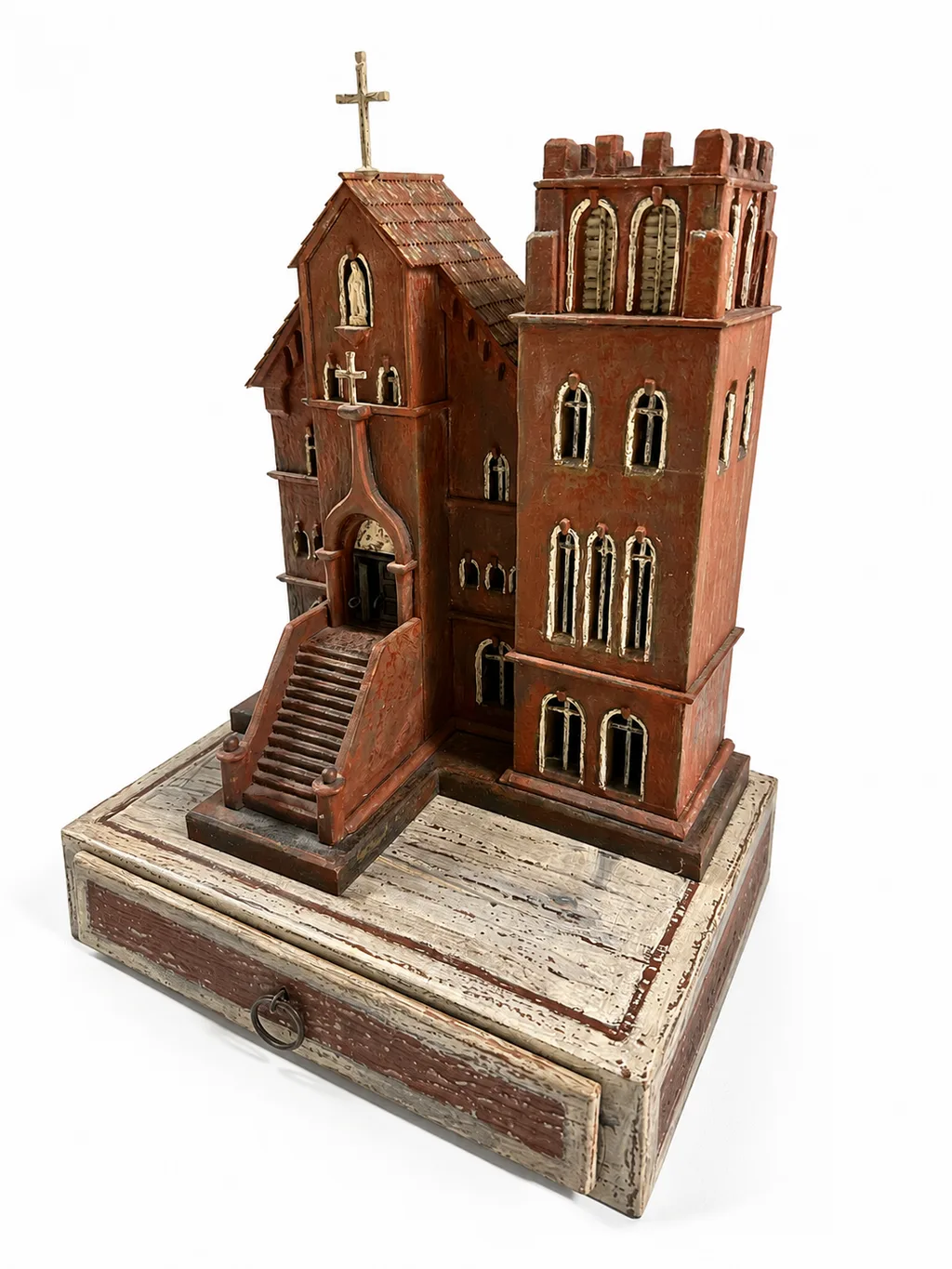
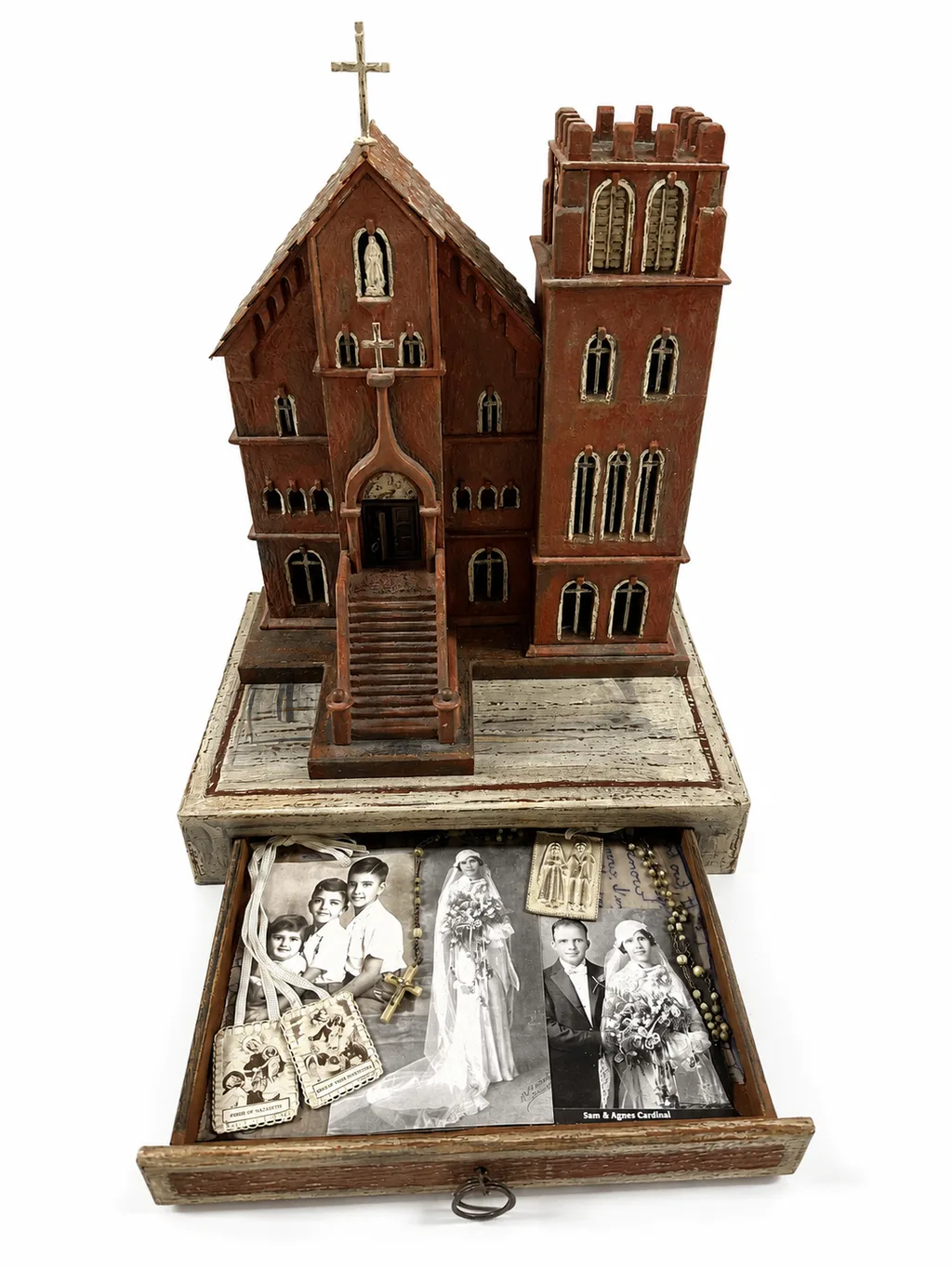
Our Lady of Mount Carmel Catholic Church sculpture by Roberto Cardinale, showing the Romanesque Revival brick facade, corner tower and entry stair.

Our Lady of Mount Carmel Catholic Church

Pueblo, CO, built 1901

The church is in the Romanesque Revival style and was originally part of the National Ethnic Parish movement for the Italian Catholic immigrants in the Grove area of Pueblo. The founding priest was the Jesuit Father Salvatore Giglio. My parents, Salvatore Cardinale and Agnes Costanza, whose parents were both Sicilian immigrants, were married in the church in 1935. This sculpture is a tribute to my parents and includes a photo of their three sons, of which I am the middle one.

11” W x 8” D x 14 ½” H · Painted pine · 2021 · Roberto Cardinale, with drawer collage by PJ Cardinale

Not for Sale · Commissions welcome

The sculpture with the base drawer open, showing PJ Cardinale’s collage with the 1935 wedding photographs of the artist’s parents.

Working Drawings

Pencil and ink on grid paper

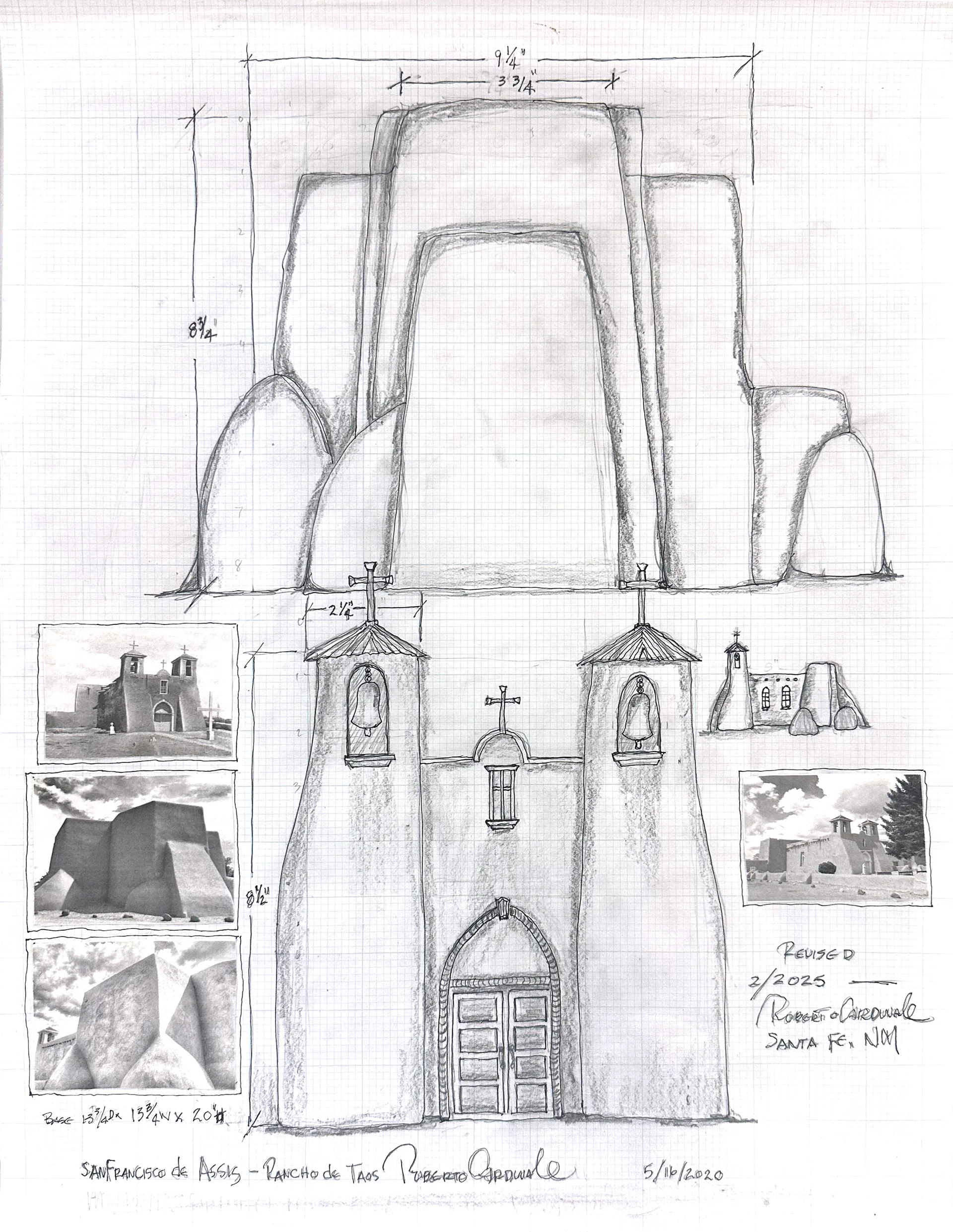
Working drawing for San Francisco de Asis in pencil and ink on grid paper, with elevation studies of the buttressed apse and reference photographs.

San Francisco de Asis

Pencil and ink on grid paper

Framed 20” W x 26” H

Working drawing for sculpture #3

$300

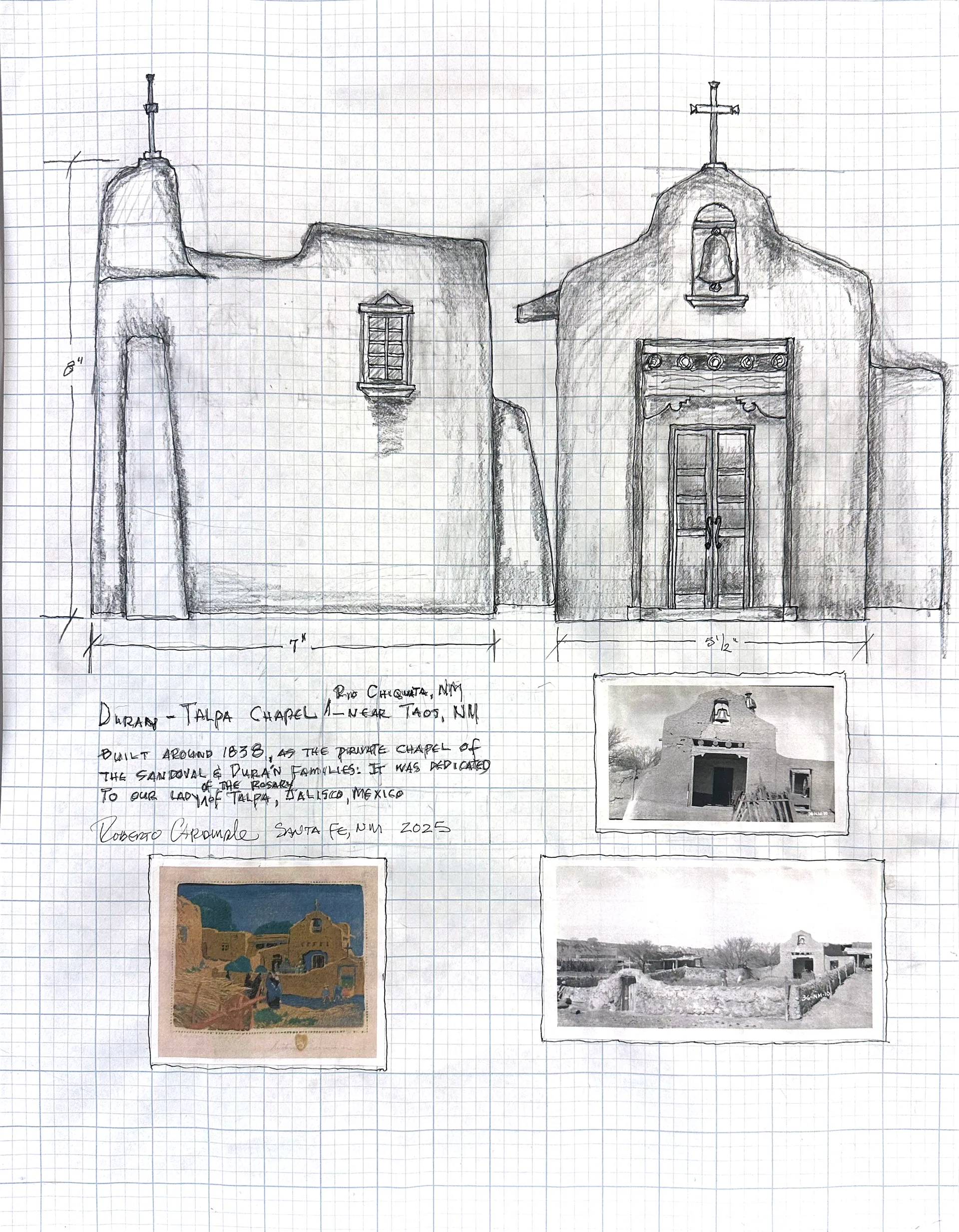
Working drawing for The Talpa Chapel in pencil and ink on grid paper, with measured elevations and reference photographs.

The Talpa Chapel

Pencil and ink on grid paper

Framed 20” W x 26” H

Working drawing for sculpture #7

$300

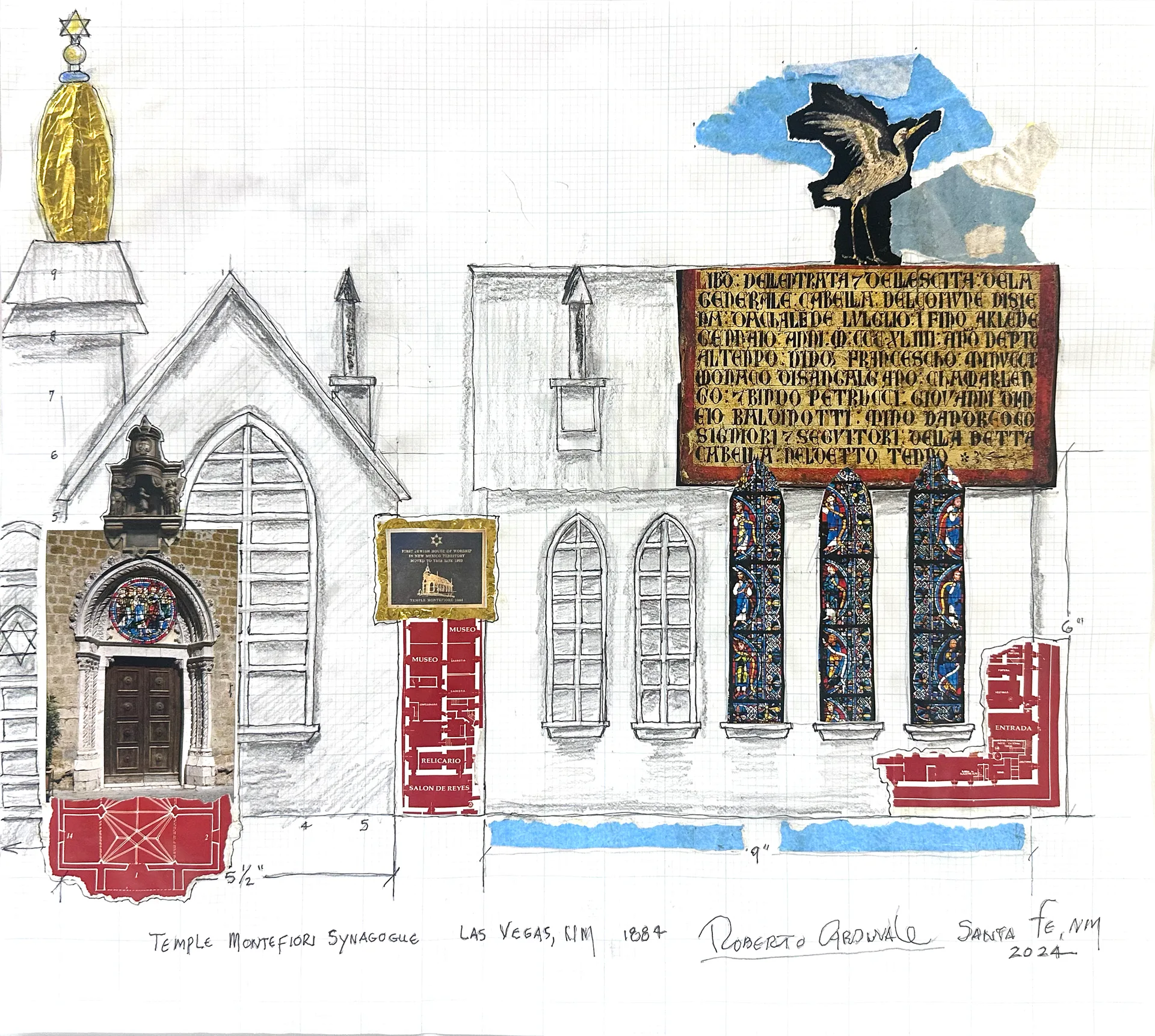
Working drawing for Synagogue Montefiore in pencil and ink on grid paper, with a coloured elevation of the facade and historical notes.

Synagogue Montefiore

Pencil and ink on grid paper

Framed 20” W x 26” H

Working drawing for sculpture #2

$300